


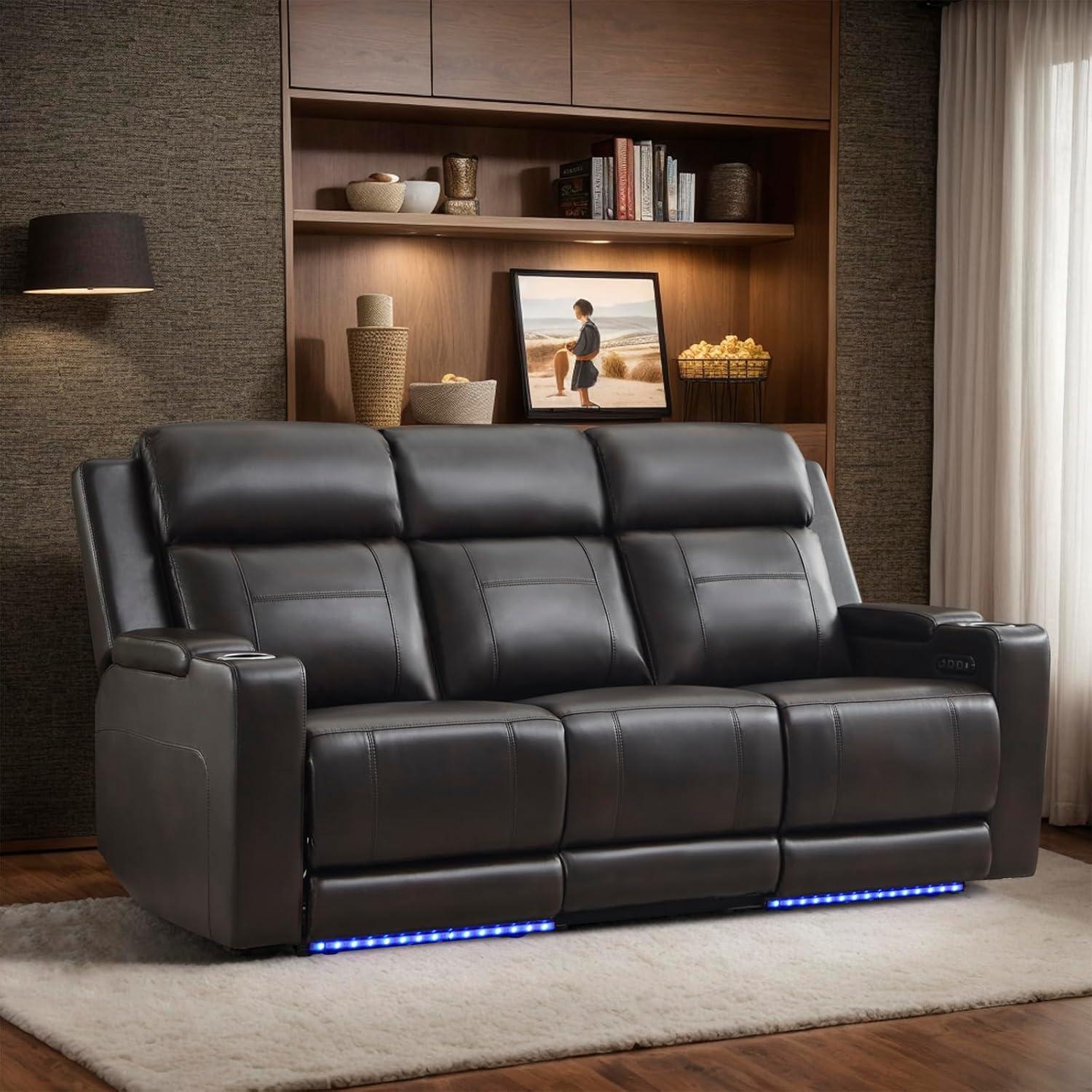
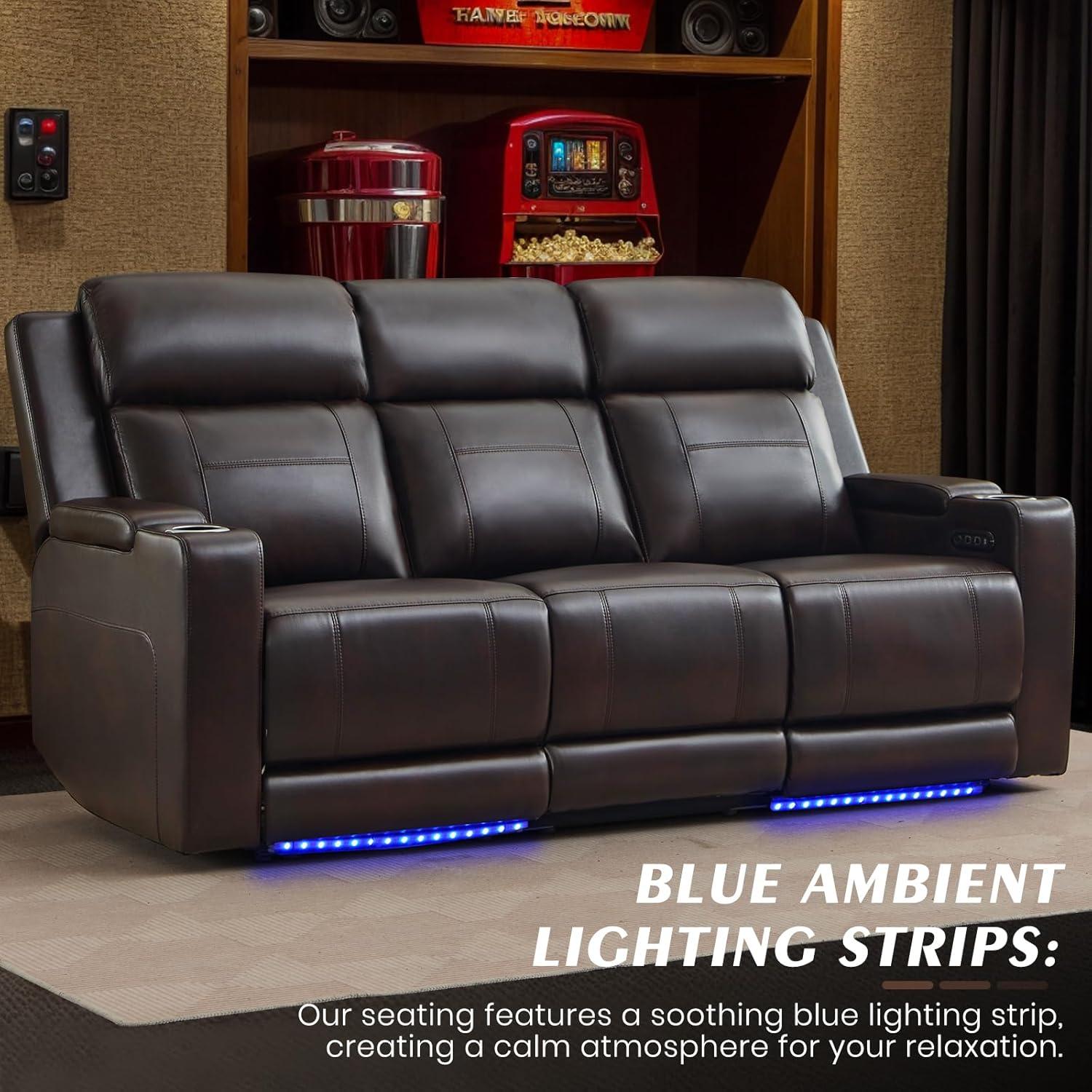
Half-lit by a soft blue LED glow,the Neptane Power Loveseat Recliner settles into the room with a low,reassuring visual weight that promptly organizes the seating area. From a few paces away you notice the slightly glossy, breathable PU leather—cool under your palm and with seams that look stitched for real wear rather than showroom gloss. Sit down and the back gives in staged, segmented layers while the headrest lifts and tilts so your view stays level whether you’re upright or leaning back. Reach into the armrest and you find a deep, hidden pocket; flip the center back and a neat tray appears, small, practical touches that feel like they were discovered rather than announced.
A first look at your power reclining sofa and what arrives in the box
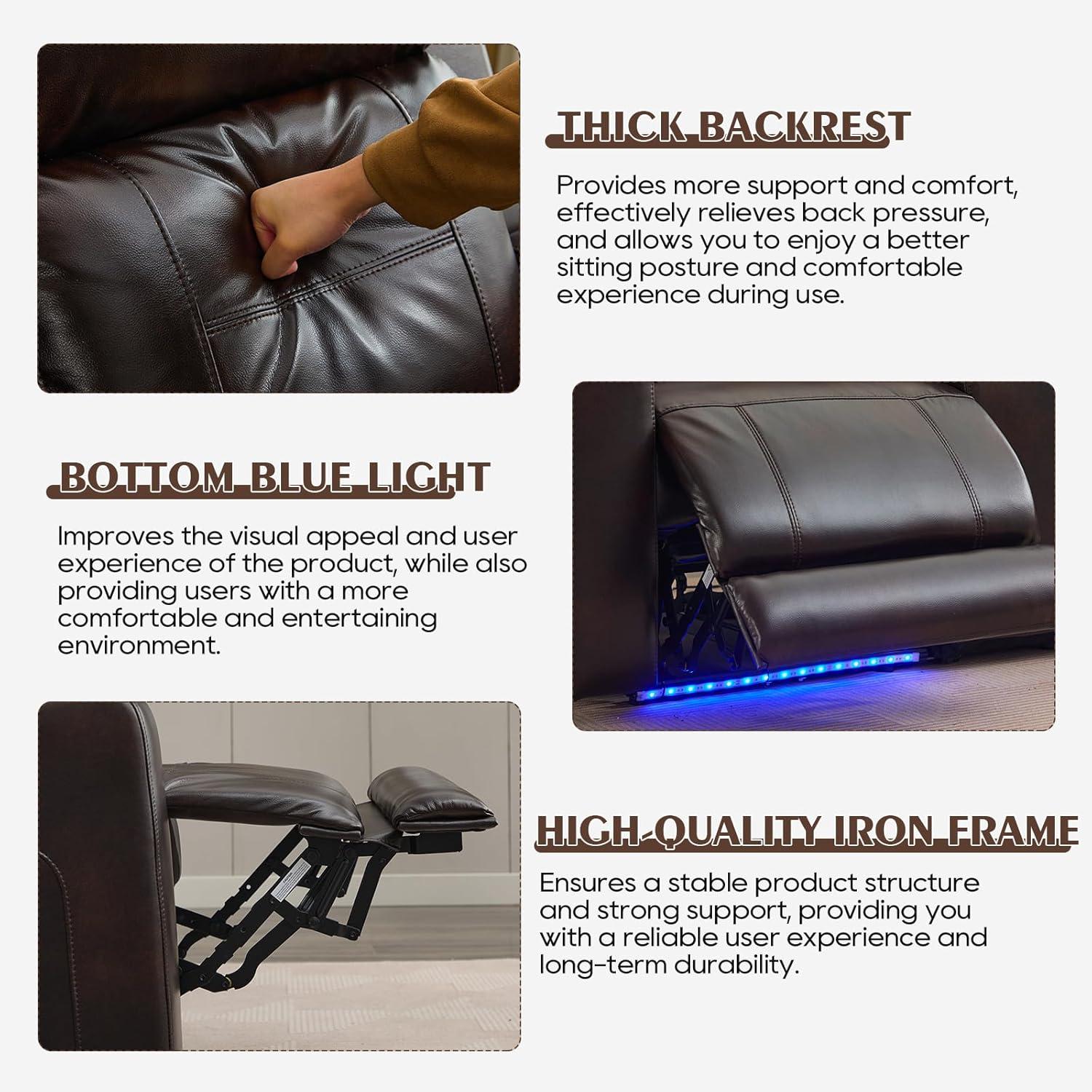
When the pieces first arrive and you peel back the plastic,the sofa reads as a handful of soft volumes rather than a single unit. The cushions tend to sit a little compressed from shipping; your first impulse is to press and smooth them, tuck loose seams and nudge the headrests into place. Armrests arrive closed and feel a little stiff until you open the hidden compartments — the lids lift with a deliberate snap and reveal shallow storage space and molded cup wells. A thin blue band of light is visible under the front rail when the unit is powered, casting a low, cool glow across the floor; otherwise the upholstery looks matte and slightly textured from its protective wrapping. Power cords and connection points are tucked under the base flaps or into cutouts at the back, so they’re out of sight once you roll the sections into position, but you’ll handle them during the brief setup.
Inside the box you’ll find the main seating sections wrapped in foam and plastic, a few small accessory items, and the paperwork. The table below summarizes what typically comes with the package as you unpack it and what you’ll be handling first.
| Item | What you’ll see on arrival |
|---|---|
| Main sofa sections | Two or three large wrapped pieces (seat modules), protected with foam corners and plastic sheeting |
| Power cable and connectors | One or two cords tucked under the bottom or in a side cutout; plug-in ends are accessible without removing upholstery |
| Hardware bag | Small zip bag with screws, brackets, plastic caps and a few fasteners for joining sections |
| Accessory module(s) | A pop-up charging/charging station piece or removable table panel packaged separately or already fitted in an armrest |
| Documentation | Instruction manual, safety/warning sheet, and a warranty card — usually on top of the wrapped cushions |
Unwrapping is a tactile routine: you’ll cut tape, shake out cushions, and reattach a couple of brackets while aligning metal slides. Small scuffs from transit are uncommon but possible on the exposed plastic corners of the packaging, and the foam inserts keep most wear to a minimum.The paperwork calls out basic safety steps right away, and the hardware bag contains the few pieces you’ll touch before the sofa looks finished in the room.
How the frame upholstery and finishes read in your room
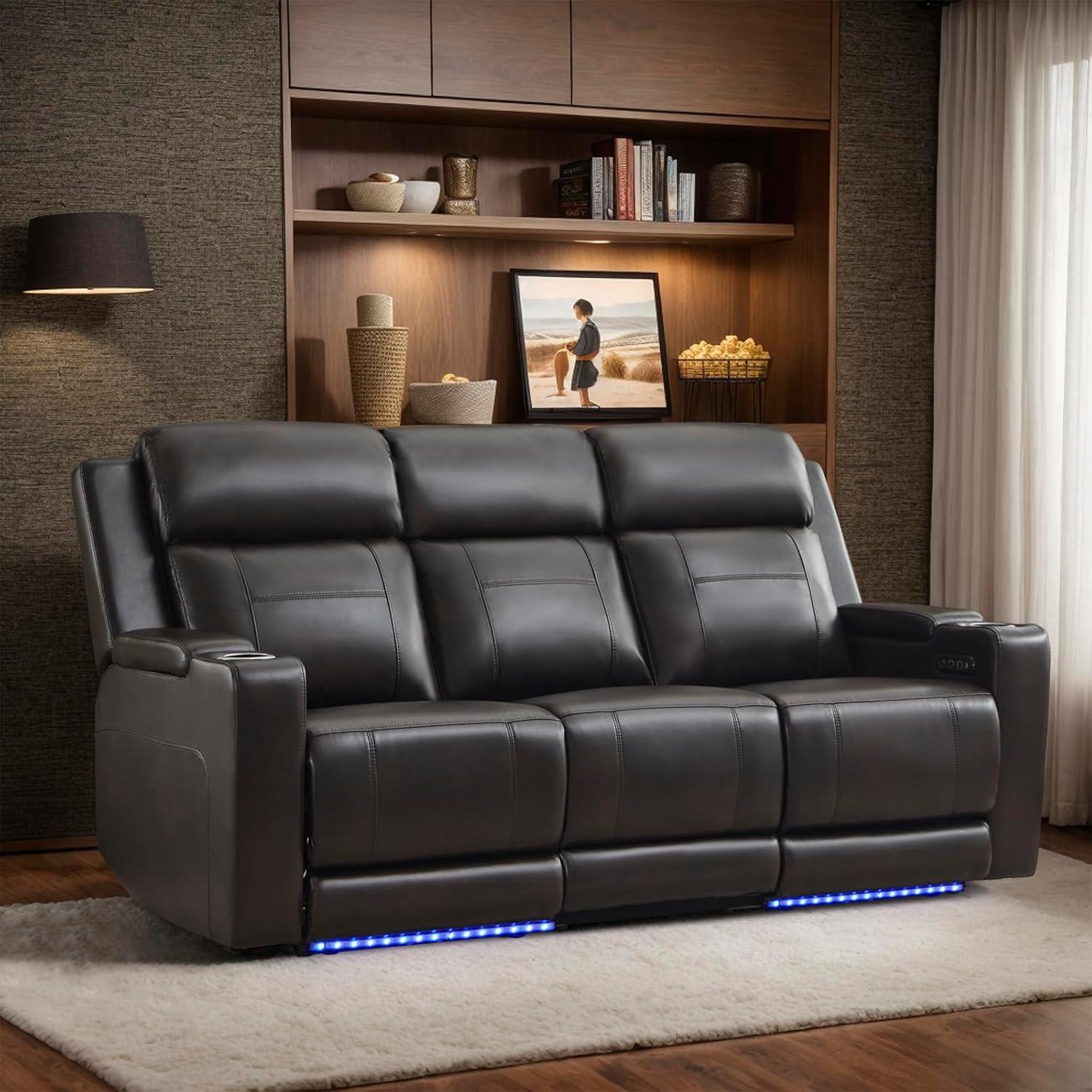
When the sofa sits in your room, the upholstery first reads as a soft, low-sheen surface rather than a matte slab or high-gloss leather — it catches the angle of a lamp and then settles back into a muted tone. Up close, stitch lines and seam joins become more visible were you tend to rest your arms or lean back; those areas often show tiny creases that smooth out again when you shift position. As you use the reclining functions and adjust the headrests, the frame’s silhouette changes subtly: backlines tighten, cushions relax, and a faint shadow forms along the base where the frame meets the floor. You’ll find yourself smoothing the seat a few times out of habit, and small surface impressions from regular use can linger until the cushions settle overnight.
| Element | How it reads in your room |
|---|---|
| Upholstery surface | Appears slightly lustrous under direct light; in softer lighting it reads more uniform and absorbs room tones |
| Seams & stitching | Become focal lines where the body contacts the sofa, showing gentle tension and small creasing over time |
| Armrest storage/flap edges | Close flush but create thin shadow lines that mark their presence, especially in side lighting |
| Trim/port panels | Reflect overhead or side lighting; fingerprints and light scuffs are more apparent than on the upholstery |
Over the course of an evening — moving between sitting upright, reclining, and getting up — finishes take on a lived look: compression marks ease, leather-like grain relaxes, and glossy trim may show the occasional smear from hands or cups. In darker rooms, the under-seat ambient glow subtly shifts nearby hues, making the upholstery read fractionally cooler; in radiant daylight the same surface looks warmer and the texture becomes more pronounced.These shifts tend to be situational and change with how often the seating is used and how you arrange the surrounding light.
How the adjustable headrest and cushions behave when you settle in
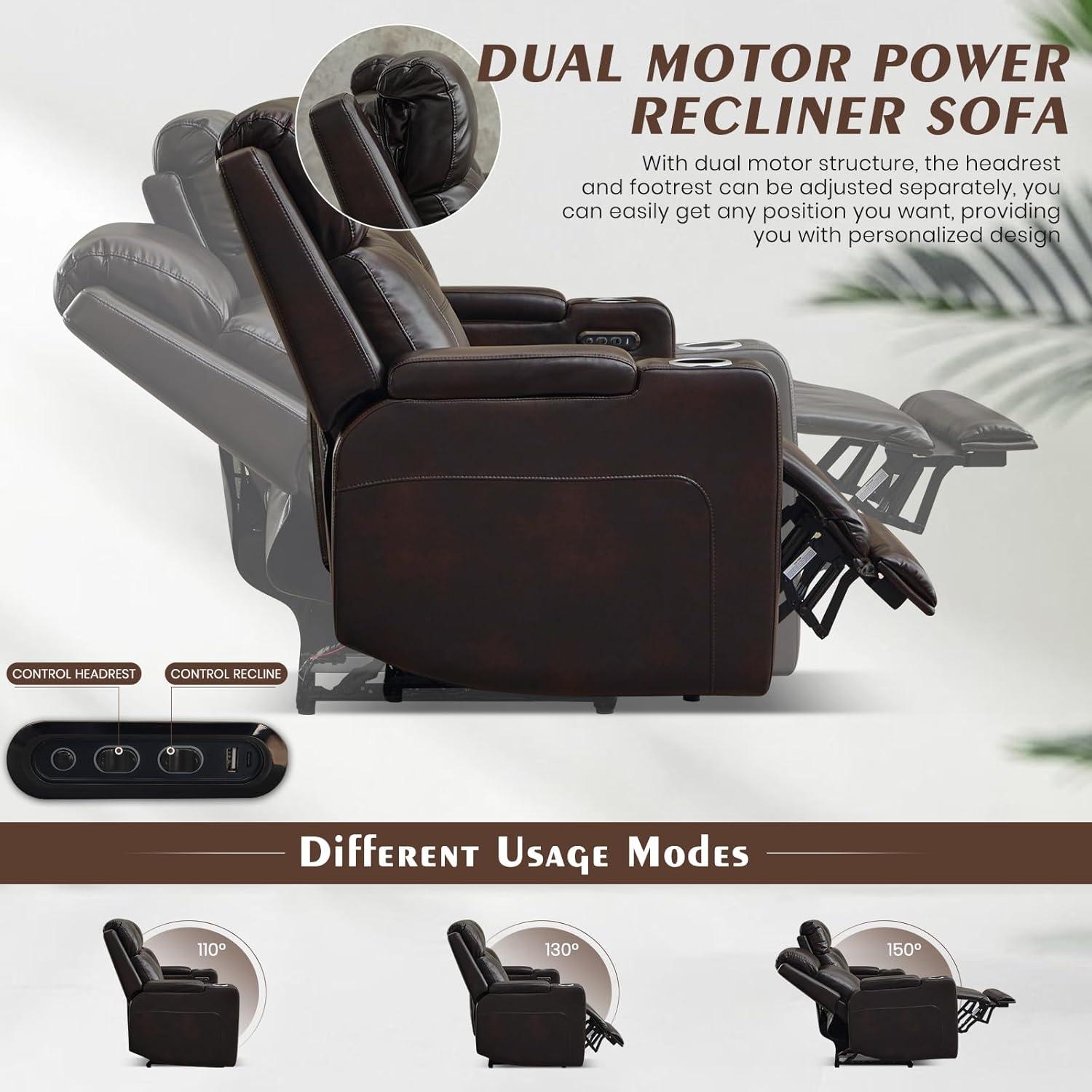
When you first lower yourself into the seat and press the headrest control, the headrest tilts forward to meet the back of your skull rather than waiting for you to lean into it.There’s a small mechanical hum as the motor moves and then the pad settles into a fixed angle; once positioned it holds steady as you shift your head.The top cushion feels firmer at the initial contact point and then eases as the foam conforms, so you often find yourself nudging the headrest a degree or two to find the spot that cradles your neck without lifting your chin.
The back and seat cushions respond in stages as you settle. At first the seat compresses under your hips with a quick sink, then the lumbar area pushes back slightly against your lower spine, making the torso feel supported rather than simply suspended. If you slide down or change posture the cushions redistribute — the center softens where pressure concentrates while the edges remain more resistant — and small creases or seams shift where your weight rubs the cover. You’ll catch yourself smoothing those folds or readjusting your position; the cushions tend to form a personalized contour after a few minutes of sitting, and they rebound slowly when you stand up.
| Moment you sit | Headrest moves into place; seat gives a noticeable initial sink. |
| after a few minutes | Cushions settle into a tailored shape; lumbar support becomes more perceptible. |
Where the LED lights outlets armrest storage side pocket and Type C USB sit when you use it
When you settle into the seat, the blue LED strip runs just beneath the front edge of the cushion so the glow falls toward your feet and the floor in front of you. It sits low enough that you usually notice it out of the corner of your eye rather than directly in your line of sight; as you shift or pull your legs up the light can feel to move with the seat, occasionally becoming partly hidden by your knees or the footrest.
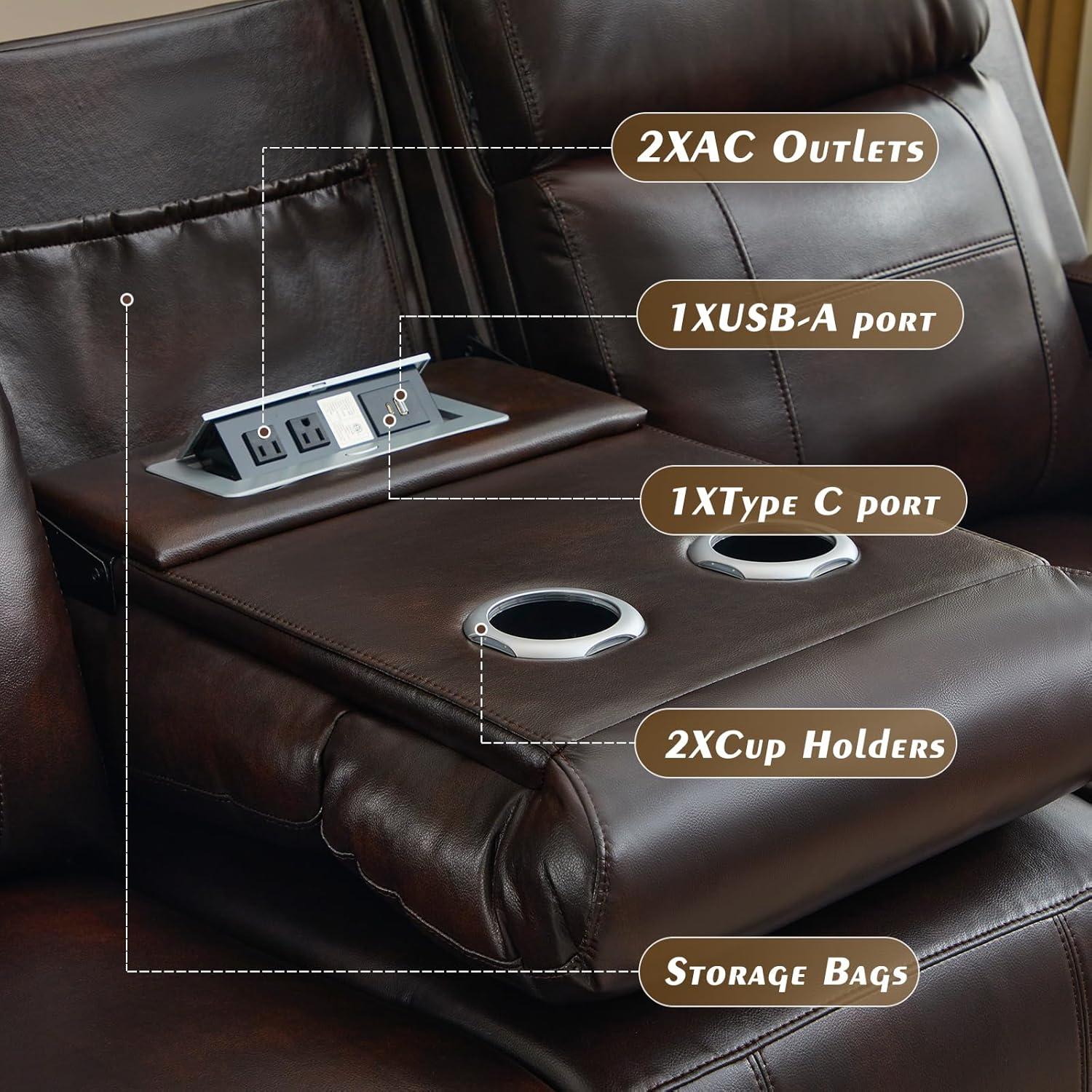
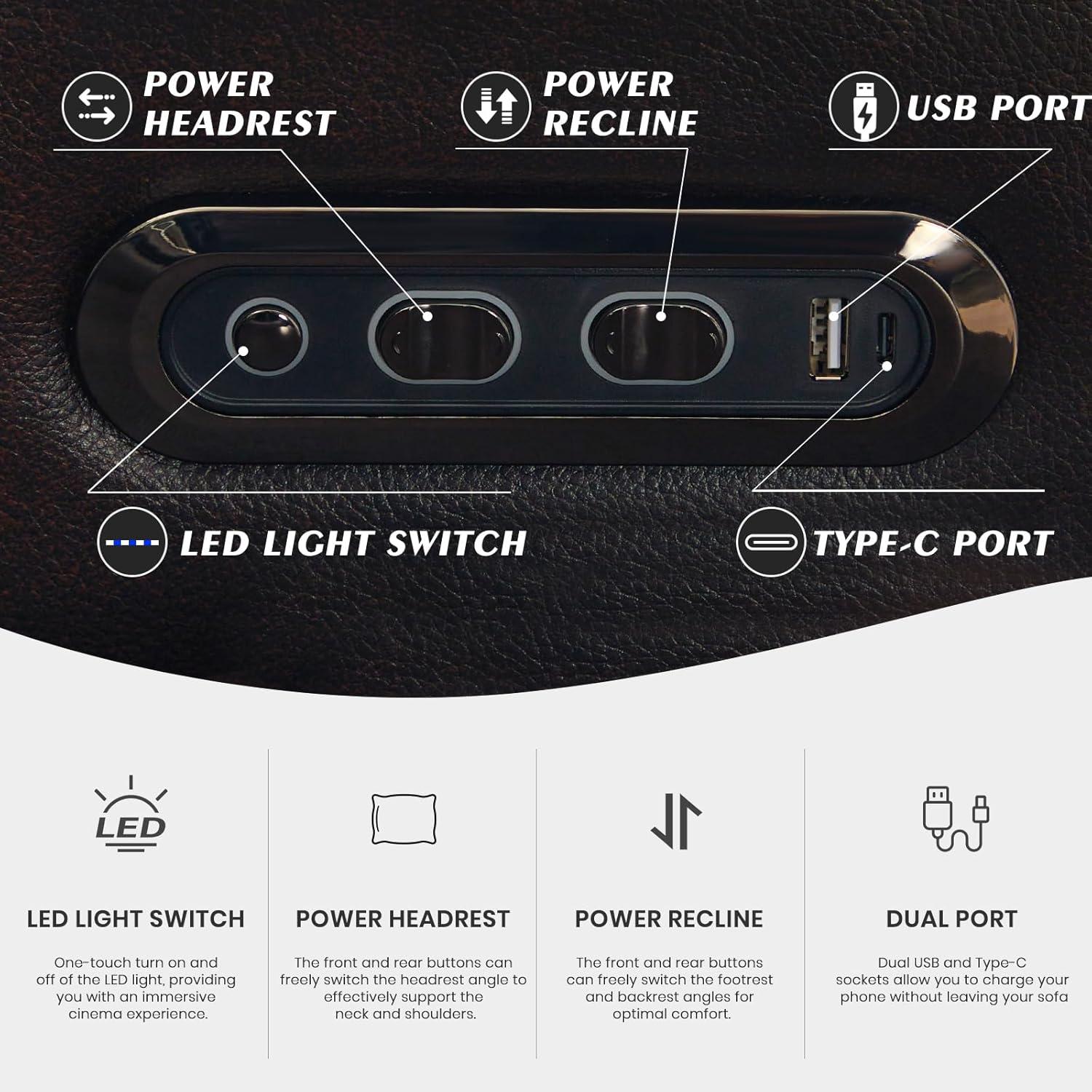
The power outlets and the accompanying USB/Type‑C port live in the pop‑up module built into the center area of the backrest/table unit. In everyday use you push the table down or flip the panel and the charging cluster rises into view at roughly arm level when you’re seated; reaching for a cable often means bringing the module toward you, and once plugged in the cords tend to drape across your lap or along the couch seam. The Type‑C port sits next to the regular USB,close enough that you usually plug both devices from the same spot.
The armrest storage is hidden under the curved top of each arm. When you open it you’re looking down into a shallow well that keeps small items out of sight but within easy reach; if you habitually rest your forearm on the armrest,you’ll frequently enough nudge the lid or smooth the fabric before digging inside. The side pocket runs along the outer side of the armrest near the seat seam; it sits where your hand naturally falls when you reach for a remote, ticket stub, or glasses, and the fabric of the pocket flexes as you slide items in and out, sometimes causing small things to shift slightly toward the back of the seat as you move.
| Feature | where it sits when you use it |
|---|---|
| LED strip | Under the front edge of the seat,casting a low glow toward the floor |
| Outlets | In the pop‑up charging module on the center table/backrest,at roughly arm level when revealed |
| Type‑C USB | Beside the USB port in the same pop‑up cluster,accessible when the panel is opened |
| Armrest storage | Under the curved armrest lid,a shallow compartment you access from above |
| Side pocket | Along the outside seam of the armrest,at hand height when seated |
How the measurements translate to your floor plan and getting it through doors
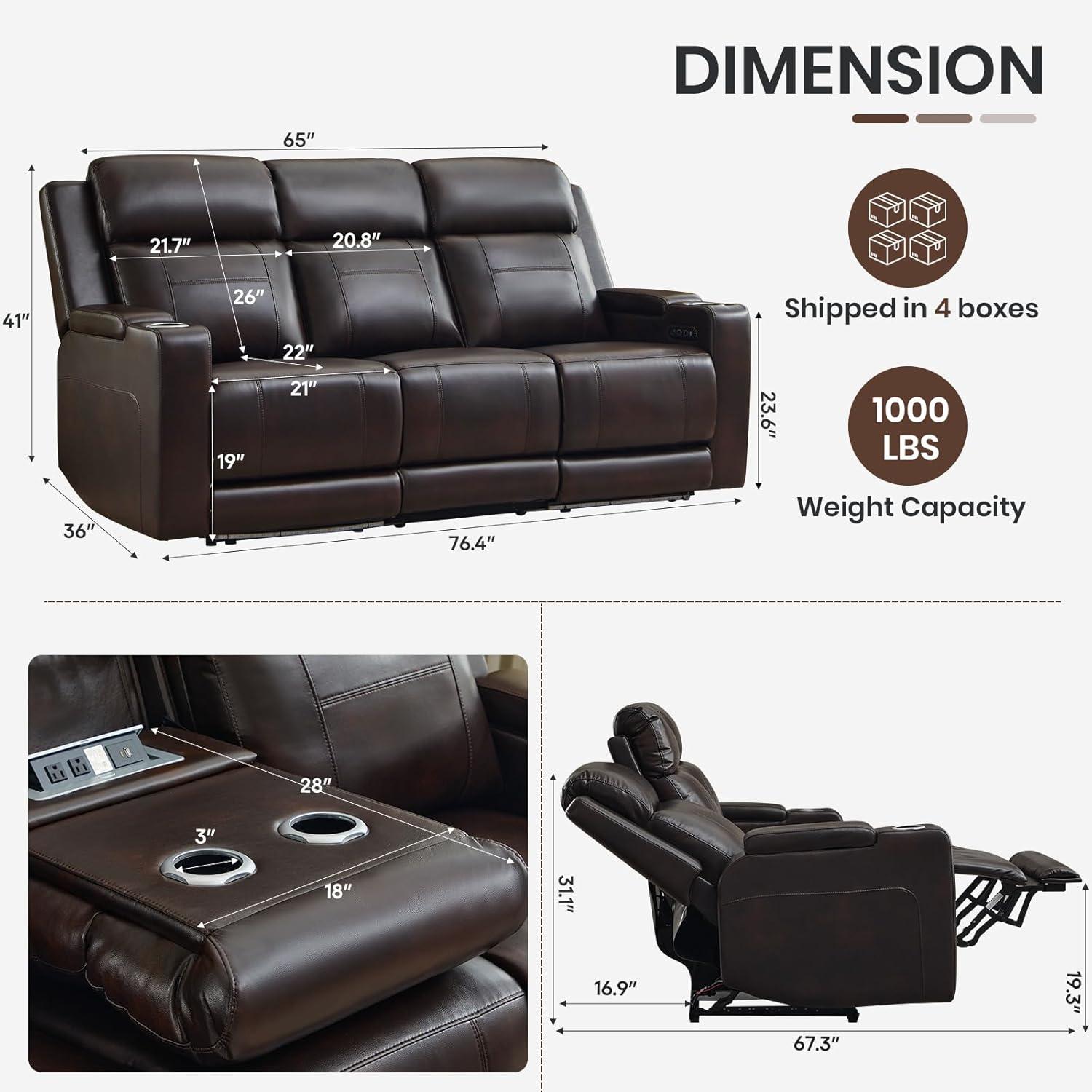
Measurements on paper often change once the seating is in place and in use. The profile shifts as the backrest and headrest move: the depth from wall to footrest increases when the reclining mechanisms are engaged, and cushions settle a few inches inward after a little sitting and adjustment. In practice the sofa occupies a variable footprint rather than a single fixed rectangle, so floor-plan allowances tend to feel looser or tighter depending on how the recline and headrest are used and whether the back is placed flush against a wall or left with a gap for movement.
Getting the piece from delivery to placement follows familiar patterns. Large openings usually accommodate the assembled sections without fuss, but narrow doorways, tight corridors, or short stair landings reveal how the sofa responds to tilting and rotation: armrests can catch on frames, the bulk may require a diagonal approach, and the unit’s weight concentrates toward the center when lifted, making it feel less predictable than its boxed dimensions suggest. The seating sometimes arrives in separable sections or with removable feet, and those moments of disassembly or minor shifting tend to be part of the move-in choreography rather than an all-or-nothing barrier.
| Opening | Observed interaction with the seating |
|---|---|
| Standard door (wide enough for major furniture) | Passes through with typical pivoting; small tilts usually suffice |
| Narrow doorway or tight corridor | Often requires diagonal angling and careful rotation; armrests may rub against frames |
| Staircase / landing / elevator | bulk and center weight make maneuvers feel awkward; sectioning or temporary removal of small parts is a common workaround |
View full specifications and size options
How it measures up to your expectations and the limitations you might encounter
Out of the box,the seating tends to meet basic expectations for a motorized home-theater setup: adjustments respond,integrated lights illuminate,and pockets and compartments are present. in everyday use, a few patterns become noticeable. Movements settle into a soft mechanical rhythm rather than instantaneous silence, and repeated adjustments often lead to subconscious small shifts in posture or cushion smoothing as the body searches for a comfortable nook. Electronics and moving parts perform predictably, though occasional minor settling noises can appear after extended periods of use.
The LED strip produces a steady wash that assists low-light navigation but also draws attention to surface dust or glossy reflections on nearby objects. Interior power and charging points make frequent device top-ups straightforward; in practice, larger adapters or multiple cables can occupy the accessible space and slightly interfere with how the drop-down table or adjacent compartments close or sit flush. Hidden armrest storage offers the convenience of stashing small items, yet reaching into those pockets frequently enough involves a brief arm or body shift rather than a reach-and-grab motion.
Surface material shows typical wear patterns over time: routine rubbing and settling create faint crease lines where seams meet, and loose fibers or pet hair can collect along fold lines. The seat and back contour cradle the torso in most positions, but long viewing sessions tend to produce subtle pressure redistribution—hands or a hip will migrate, cushions are smoothed, and the headrest is nudged into new angles to relieve tension.
| Expectation | Observed in use |
|---|---|
| Ambient lighting eases movement in the dark | provides a soft pool of light but highlights dust and can reflect on nearby screens |
| Integrated power and USB ports stay accessible | Convenient for charging, though bulkier plugs can crowd the area and affect closure of nearby panels |
| Hidden storage keeps small items handy | Useful for quick stashes, yet access usually requires a slight shift in seating position |
observed limitations line up with how moving parts and integrated electronics behave during normal use: minor settling, occasional crowding of shared spaces, and gradual surface patina from contact. These are tendencies rather than sudden failures, and they emerge through regular daily interaction—reaching for a cup, adjusting the headrest, or smoothing a cushion—more than through dramatic changes.
View full specifications and colour options
Daily upkeep installation quirks and moving notes to keep your sofa performing
When you first slot the pieces together you’ll notice little alignment quirks: the metal brackets want to meet at a precise angle, and the halves can rock a hair until the clips engage. It helps to test the power functions before you slide the sofa into its final position — the headrest and backrest should move smoothly across their range and the cord routing should reach the outlet without snug stretching. as you sit and use the sofa, cushions will shift and seams will relax; your hands will find yourself nudging the seatbacks or smoothing the leather once or twice a week to keep lines even and the padding settling evenly.
daily upkeep tends to be low‑effort but situational. Wiping visible surfaces with a soft, slightly damp cloth removes fingerprints and light dust without stressing seams. small crumbs collect in the cup holders and armrest compartments faster than you expect; emptying those pockets prevents spills from working into the creases.Vacuuming around the reclining hinge and between seat cushions clears grit that can abrade the upholstery over time. The LED strip and ports gather dust too — a quick pass with a dry microfiber cloth keeps lights bright and ports accessible. If you unplug the sofa when it’s unused, the cord lies easier for moves and the control box stays cool; watching the plug and outlet area for any debris is a regular, practical habit.
Moving the sofa brings its own set of behaviors to watch for. Unplugging and removing loose cushions before lifting reduces awkward weight shifts. Sections that lock together can require a firm, level lift to disengage; tilting one end may make clips bind or pinch the fabric. You’ll feel the difference when the frame is carried from its base versus by the arms — the armrests can flex and pull at seams if used as lifting points. During transit, store smaller removable pieces (headrest cushions, remotes, charging cables) separately so they don’t rattle around and scratch the surface.
| When preparing to move | What to check | Typical observation |
|---|---|---|
| Unplug and stow cords | Control box and power lead free of tension | Cords lie flat; connectors easy to access |
| Remove loose parts | Cushions, remotes, small inserts | Less rattling; lighter lifts |
| Disconnect sectional clips | Brackets aligned before lifting | Clips release with a level lift; a twist can bind |
over time you may notice the motors feel warmer after extended use and the upholstery develops faint creasing where you habitually sit; these are common, situational changes rather than sudden failures.Regularly clearing the armrest storage of liquids and debris, keeping the reclining path unblocked, and giving cables a quick visual check before and after moving will keep those everyday quirks from becoming persistent nuisances.
How It Lives in the Space
You don’t so much set it up as notice the way the power Reclining Sofa with Adjustable Headrest, Home Theater Seating with LED Light/Armrest Storage/Outlet/side Pocket/Type‑C USB, Power Loveseat Recliner Sofa for Home Theater quietly finds a place in the evening patterns of the room. Over time the cushions take on the familiar dips of who sits where, the armrests collect small scuffs, and the surface softens in the spots you use most. You watch how it redirects the room’s traffic — a slow anchor for reading, for pausing between chores, for the odd long conversation — folding into daily routines as the room is used.It stays.
As an Amazon Associate I earn from qualifying purchases.

