


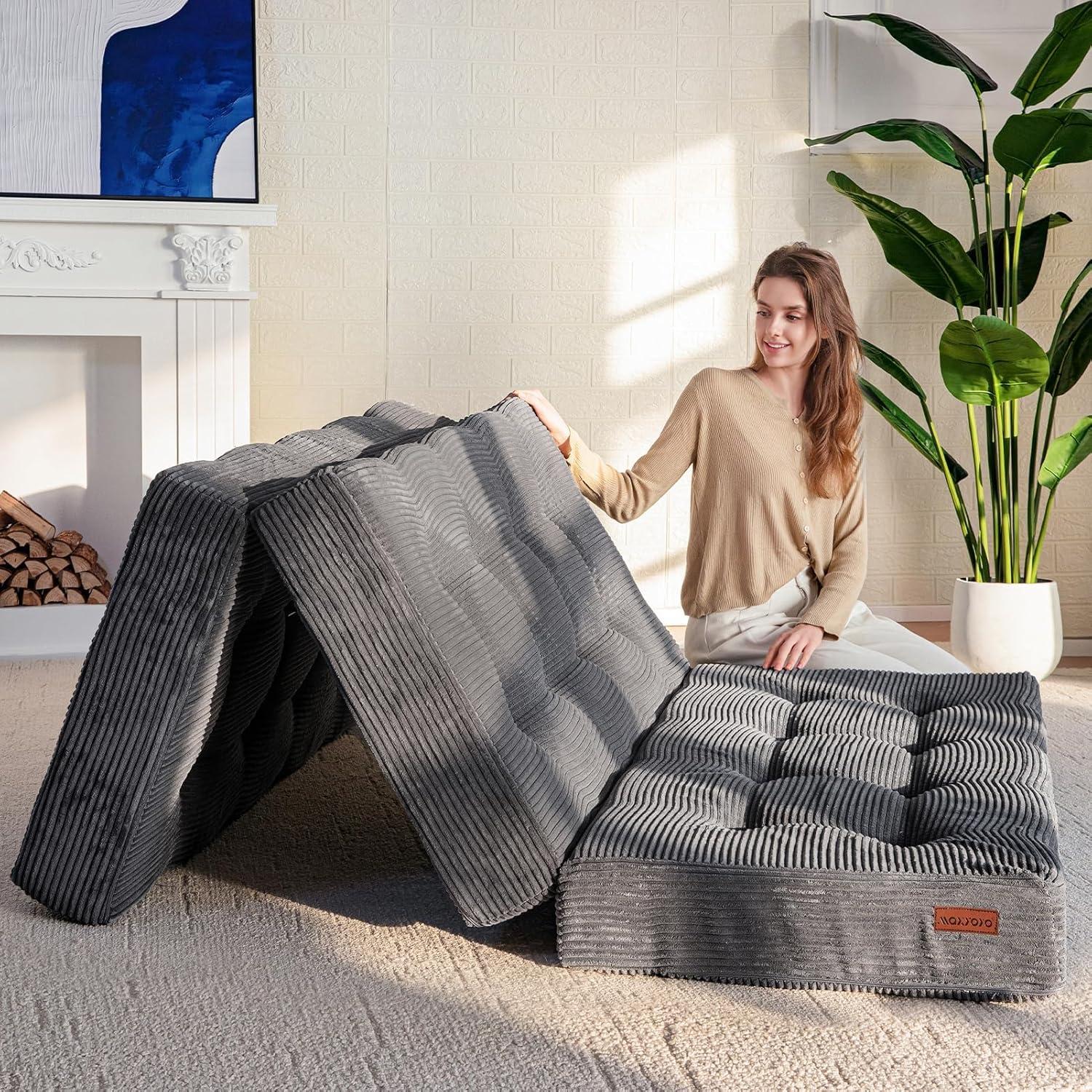
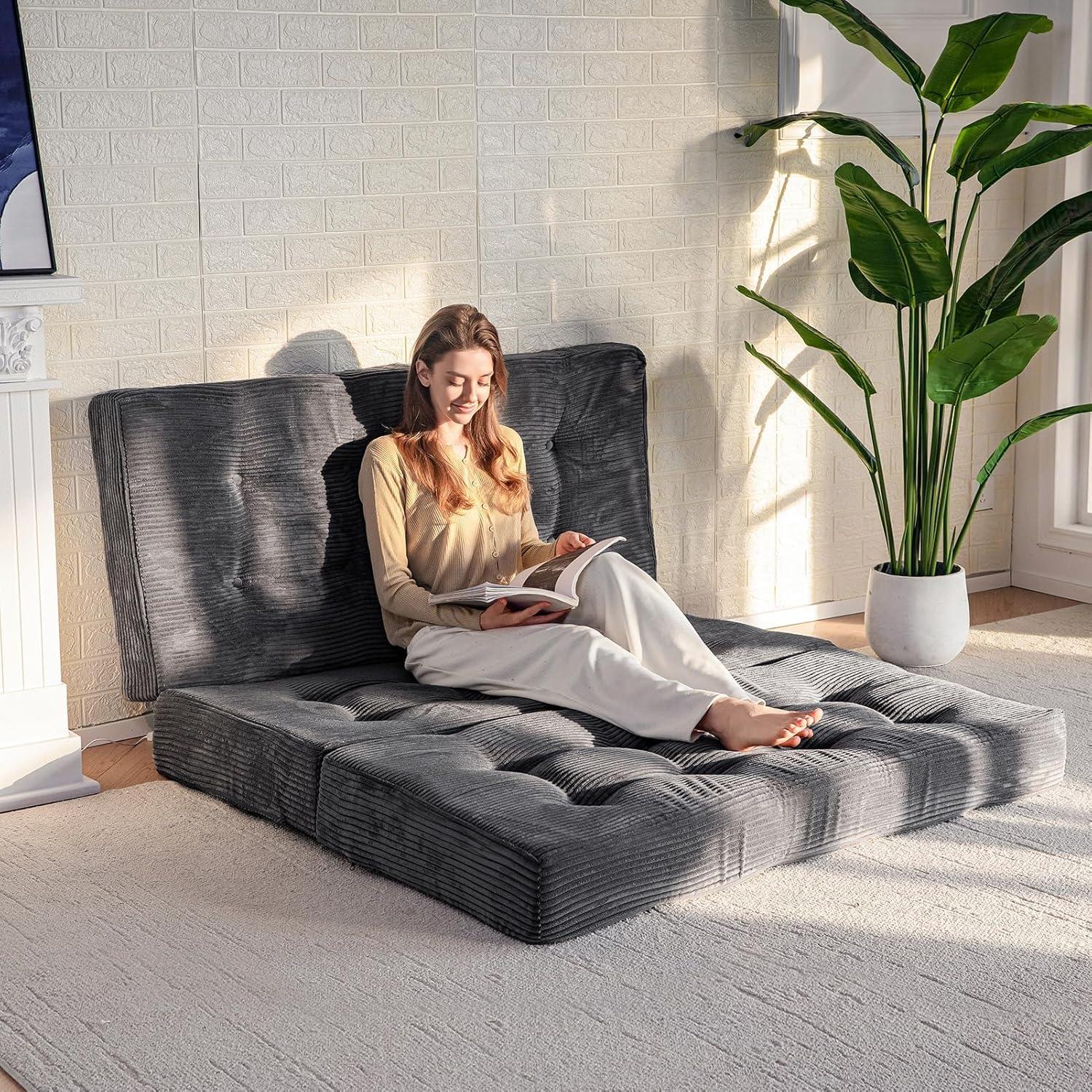
You notice it the moment you reach down: the dark-gray corduroy top has a dry, ribbed feel under your palm and the tufted dimples catch the light into soft shadows. The MAXYOYO Tri-Fold Mattress — the tri-fold futon, for short — unfolds into a low, broad pad whose roughly six-inch thickness feels compact and springy rather than lofty. It arrived tightly vacuum-packed; you unroll it and watch the dense foam gradually bloom and settle into an even plane across the floor. Visually it reads substantial but not bulky, a quite presence that slightly shifts the room’s scale as soon as you sit on it.
When you first unfold the MAXYOYO tri fold mattress what greets you in the box

when you slice open the outer plastic, the first thing that meets you is a compact, tightly folded bundle — a neat rectangle with the panels pressed flat against one another. The vacuum-sealed wrapping pulls the corded fabric into crisp creases; you can already make out the tufted dimples through the plastic and the seam lines were the tri-fold sections will hinge. There’s often a soft, slightly chemical scent at first, and the mattress gives a small, audible sigh as air rushes back in once the bag is removed.
You’ll find yourself smoothing and shifting the cover out of habit, running fingers along the corduroy ribs and patting the tufted surface to coax the folds open. The panels begin to spring up within minutes, though some fold lines and shallow creases linger until you sit or lie on it and the foam warms and settles. The overall impression is of a thick cushion folded for transport — familiar seams, visible tufting, and a fabric texture that invites a few exploratory tugs and smoothing motions before the mattress relaxes into its intended shape.
The corded fabric and tufted finish up close as you run your hand over it
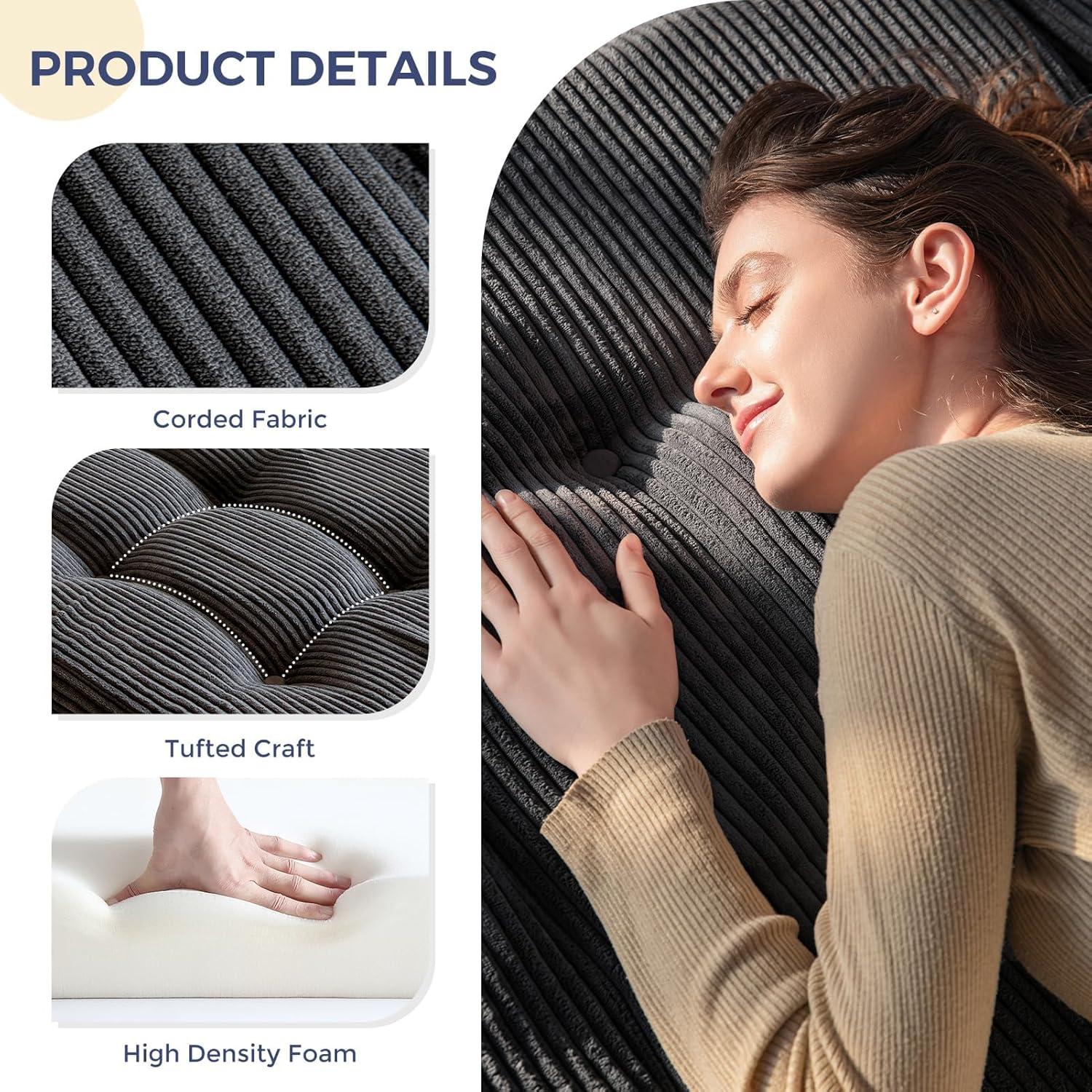
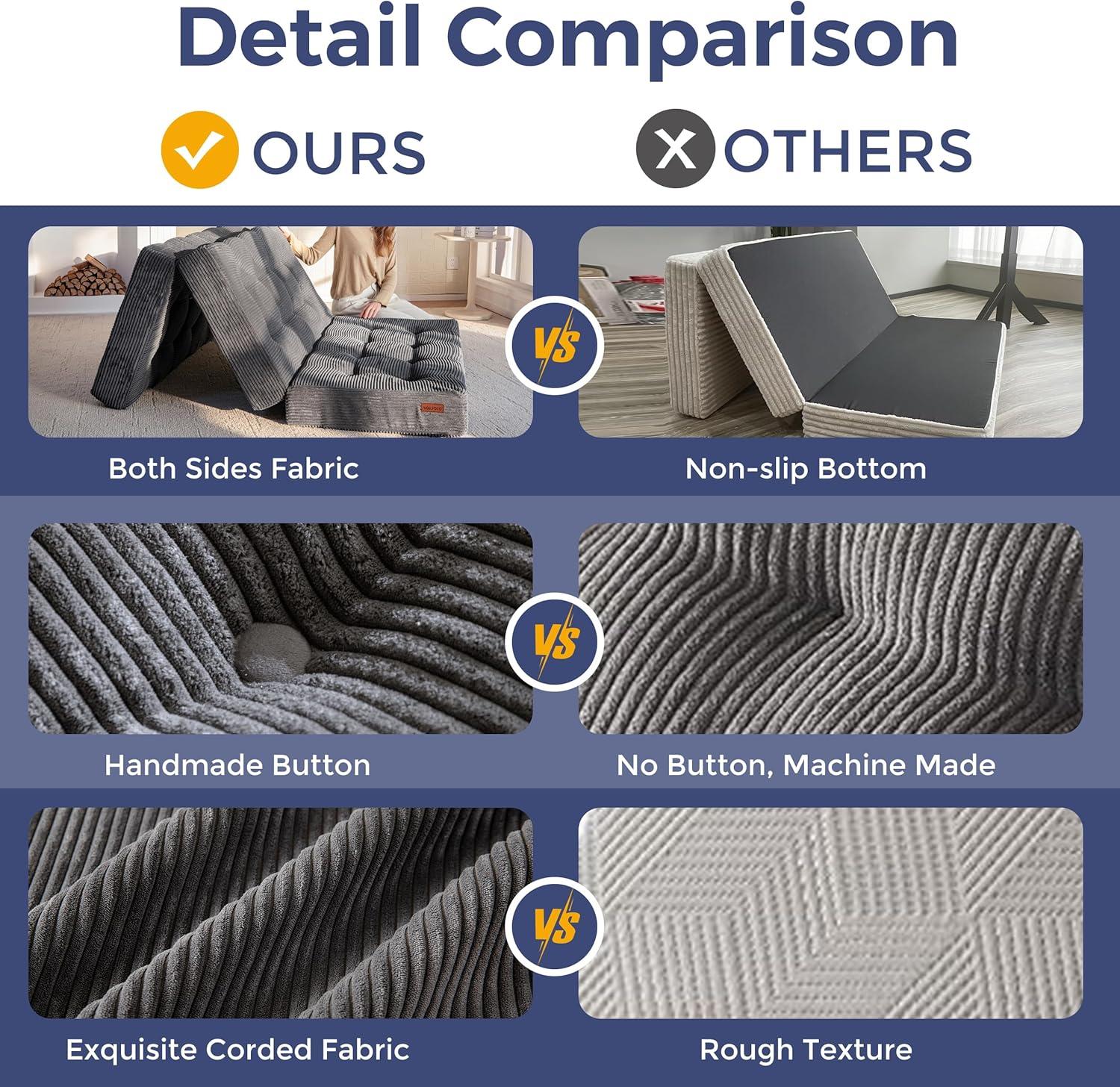
When you drag your hand across the surface,the corded fabric greets you with a low,velvety rib that has a clear direction to it — smooth if you stroke along the ribs,a touch more resistance across them. The ribs catch light and dust differently,so your fingers pick up a faint,uneven texture rather than a perfectly flat cloth.There’s a subtle swish as your palm moves, and the nap warms slightly under your touch; areas you smooth will show a temporary change in sheen until the fibers settle again.
The tufted finish reads as a pattern of shallow hollows and raised points where the stitching pulls the cover into the fill. Pressing on a tuft gives a small,immediate give and then a slow rebound; between the tufts the fabric feels a bit looser,so you tend to smooth those stretches or nudge seams back into place without thinking about it. Around the folded edges the stitching and seam lines are more noticeable under your fingertips, and the combination of ribs and tufting produces tiny surface creases that relax over time with movement. the surface behaves like a lived-in textile — it shows hand marks, shifts when you adjust cushions or sit down, and settles differently after a few minutes of use.
Under the cover what the foam layers and stitching reveal when you inspect construction
When you unzip and pull the cover back a few inches, the first thing that catches your eye is the tufting threads running straight down through the layers. The tufts aren’t just surface dimples — the stitching passes through the top fabric, a thin lining, and into the foam stack, where small knots or tie-offs sit flush against the underside. Those tie points show as tiny puckers on the inside lining; as you smooth the fabric with your hand you can feel where each stitch cinches the layers together.
Parting the lining reveals a layered assembly rather than a single homogenous slab. A softer, slightly finer-cell foam sits nearest the top, giving way to a denser foam below; the transition is visible as a faint change in color and compression when you press down. At the tri-fold hinge lines the foam is cut or compressed to allow folding, and you’ll notice thinner foam and slightly rounded edges there where the material has been shaped to bend. Glue lines and occasional fabric tabs are visible where the interior panels were bonded or stitched; they tend to cluster near seams and at the corners, and you’ll sometimes feel them as stiffer strips beneath the lining when you run your hand across.
the internal stitching choices stand out in use.Perimeter seams are overlocked and return a firmer edge that keeps its shape when you fold and unfold the mattress.Stress points where the folds meet have extra bar tacks or reinforcing stitches; those areas resist the small habit of tugging at a corner when you reposition the mattress. In most cases the stitching spacing is fairly tight, so the lining lies flat, but you can still see occasional stitch variations where the fabric was eased around the tuft points.
| Area inspected | What you’ll see |
|---|---|
| Tuft points | Threads passing through layers, small knots/tie-offs against lining, surface dimples |
| Fold hinges | Compressed or thinner foam, shaped edges, reinforcing fabric tabs |
| Perimeter seams | Overlocked stitching, firmer edge, occasional bar tacks at corners |
How the sleeping surface responds when you lie down change position and roll over
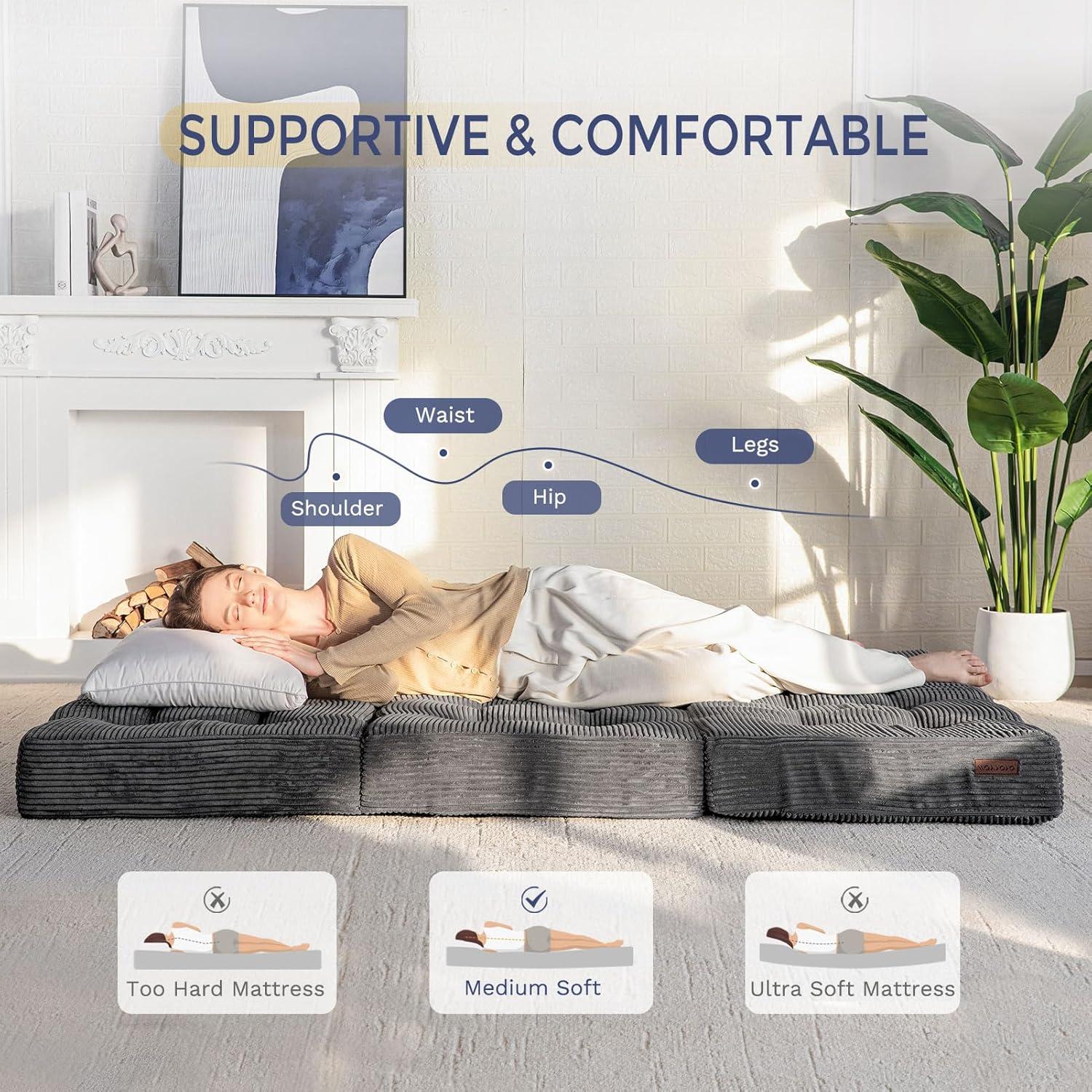
When you first lie down the surface gives a noticeable initial sink before settling — not a sharp drop, more of a gradual easing where the fabric and quilting compress and then push back. As you settle, you may find yourself smoothing the cover or nudging a seam without thinking; the fold lines and tufting create faint contours that you unconsciously accommodate by shifting your hips or shoulders a little to find an even feel.
Changing positions brings small, repeatable changes in how the pad reacts. If you roll from back to side the surface yields under the heavier parts of your body and then rebounds as you move; there’s a swift, slightly dampened rebound rather than a brisk snap, so rolling is easy but not feather-light. Moving from knees-tucked to fully outstretched can make the folded sections beneath your legs register as subtle ridges; you’ll often adjust leg placement or pat the cover smooth to reduce that sensation.When you shift repeatedly overnight the fabric slightly crimps and then relaxes, and you might notice the creases shifting along with your movements.
| Action | Typical surface response |
|---|---|
| Lying flat | Gradual sink followed by steady support; quilting molds to contact areas |
| Rolling over | Moderate resistance at fold lines, damped rebound as the foam readjusts |
| Changing positions (back↔side) | Localized compression and slow recovery; minor shifting of surface creases |
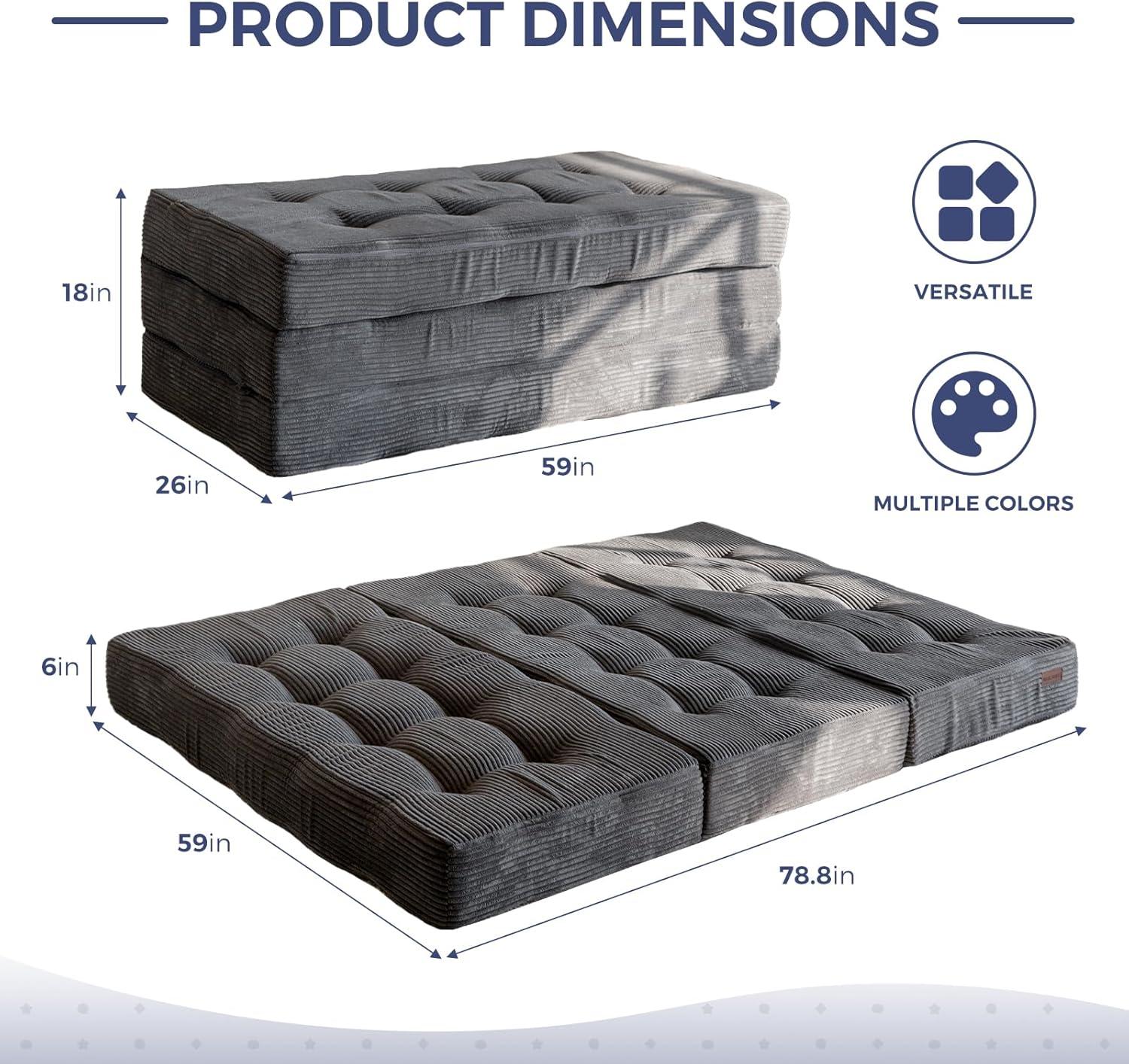
How the mattress dimensions translate to your room layout and common sleeping setups
Unfolded, the mattress stretches across floor space much like a standard bed,occupying a sizable portion of a small bedroom or studio. In situ it frequently enough reaches from wall to a little past the midpoint of a typical dorm or guest room, leaving a narrow strip of clear floor around it. Placed in a living room, it commonly sits in front of a sofa without wholly blocking traffic—though in tighter layouts the edges can graze the coffee-table zone. The surface shows use quickly: seams crease where people roll, the corded fabric nap flattens along common paths, and smoothing or a quick pat-down becomes an unconscious habit after guests leave.
Folded or propped,the triple-fold format changes the conversation about storage and occasional seating. Folded into thirds it becomes a low bench or a compact stack that leans against a closet wall or slips beside a couch; when used this way it tends to bulge slightly at the hinges and the top layer will shift a little with repeated sitting. In many living arrangements it fits into a closet or under a bed more easily than a full mattress, but it still requires a clear shelf or upright space roughly equivalent to a shallow ottoman. The mattress can also be moved into different orientations—laid lengthwise along a hallway for a quick nap or crosswise on a platform for an extra guest spot—with minor adjustments to fabric and seams each time.
| Common setup | Comparison with familiar furniture | Typical in-room effect |
|---|---|---|
| Floor sleeping in a small bedroom | Similar footprint to a standard bed | Leaves narrow walkways; dominates floor area |
| Laid out in a living room | Comparable to a large rug/sofa front space | Sits comfortably against seating but may overlap coffee-table zone |
| Folded for storage or seating | About the bulk of a low bench or ottoman | Fits upright in closets or beside furniture; hinges show creasing over time |
For detailed specifications and available size or color options, view the full product listing here.
How you fold carry and store it between uses from guest bed to campsite
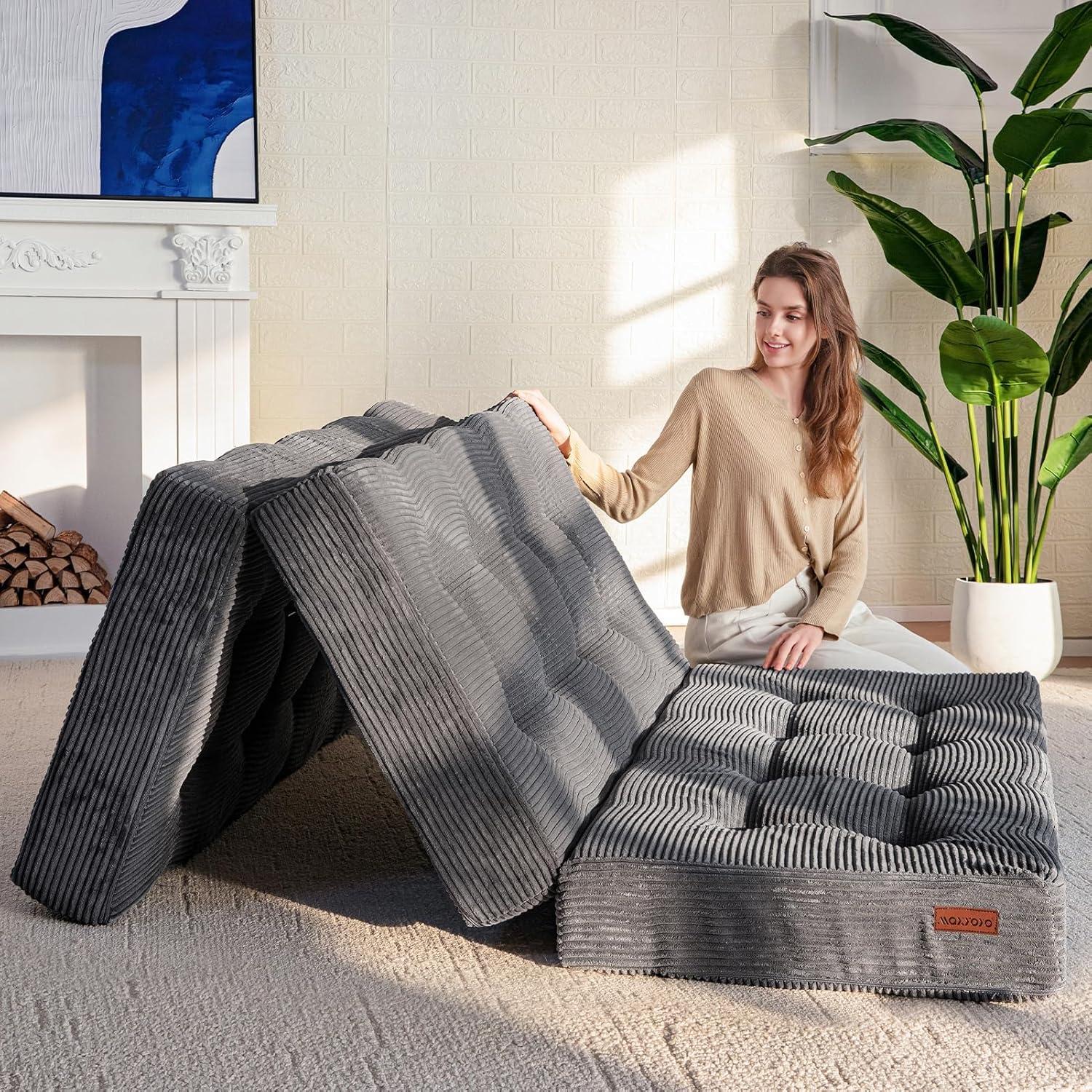
You fold it along the pre-made creases, bringing the two outer panels in toward the center and smoothing the top as you go.The tufted seams naturally guide the bend, but you still find yourself nudging edges into line and pressing out trapped air with the heel of your hand. Once folded into the three panels it sits as a compact bundle, though the foam can shift a little; you’ll often run a hand along the seam to even things before you lift it.
As the mattress is soft rather than rigid, you tend to pick it up with both hands—one near the middle and one supporting an end—or tuck it under an arm for short carries. On the move between a guest room and the car you catch the folded mattress on an edge and tilt it upright to balance, and when you’re going a short distance you sometimes drape it against your side and straighten the fabric as you walk. The folded shape doesn’t lock, so it can bulge or slump a little while you shift it into the trunk or into a tent.
For storage between uses you most frequently enough lean it upright in a closet or slide it flat under a bed, leaving it folded so it takes up less floor space. At a campsite you’re likely to lay it flat inside a dry shelter or rest it against a wall to air out before packing.Over several repeats you may notice gentle creasing at the folds and a slight need to smooth the corded fabric before each use; these are typical effects of storing a foam mattress folded rather than laid out flat.
How this mattress suits your needs and where expectations meet reality and practical limits

When unfolded and put into use, the surface presents as a flat, promptly usable sleeping or sitting area, though the initial feel can change over the first day or two as trapped compression eases and the mattress settles into its intended profile. during a typical evening, movement tends to shift the fill toward areas of frequent use, so smoothing the cover and nudging seams back into place becomes an unconscious, occasional habit. Sitting for extended periods produces a different impression than lying down; the center can yield more under sustained pressure and the edges may slope slightly when used as an impromptu seat, which alters how the surface is positioned for the next use.
The folding and unfolding cycle does what it promises — it reduces footprint — but repeated handling leaves faint creases along fold lines and slightly changes how the tufting sits. On hard floors the mattress generally stays put, though on slick surfaces minor sliding appears during restless turns. Breathable fabrics show everyday signs like small pills or lint over time, and seams may require occasional re-adjustment after transport. These behaviors describe the trade-offs typically encountered when trading a compact, portable sleep surface for a mattress that will be used regularly in different positions and spaces.
| Expectation | Typical observation |
|---|---|
| Immediate full loft | Loft returns progressively over 24–48 hours after unpacking |
| Stable surface for long use | Comfortable for short to medium durations; more give appears with prolonged pressure |
| Foldable without signs | Fold lines and slight tuft shift become visible after repeated folding |
View full specifications and available sizes and colors
Care handling and cleaning notes you encounter over time
When you live with this mattress, small, habitual motions become part of its care: smoothing the corded fabric with the palm of your hand, nudging a seam back into place after someone sits on the fold, or running your fingers along the tuft lines to coax the foam back into an even surface. The fold creases are visible at first and tend to soften with repeated unfolding and lying-flat periods, but you’ll still notice faint lines where the panels bend. The tufting generally keeps the filling from shifting wildly, though high-use spots flatten more quickly and prompt you to press and redistribute the foam now and then.
Cleaning behaves the same way — quick, surface-level actions are the ones you reach for most. A dry vacuum or a brush lifts loose crumbs and pet hair, though the corded nap can trap fibres so you often go over the same area twice. Damp blotting removes fresh spills but darkens the nap temporarily and leaves a slightly different texture once dry. For odors or heavier use, you tend to let the mattress air flat for several hours; laying it out in a breezy room brings most everyday smells down without aggressive wet cleaning. Over months the fabric shows faint changes in nap direction where hands and bodies repeatedly touch it,and those areas respond more slowly to spot treatments.
| Typical action | What you’ll notice | When you tend to do it |
|---|---|---|
| Vacuum/brush | Picks up crumbs and surface hair; may need a couple passes where the corduroy grips fibres | After heavy use or weekly in most households |
| Spot clean with damp cloth | Blotting removes fresh marks but briefly darkens the nap; texture evens as it dries | Immediately after spills or as incidents occur |
| Airing flat | Reduces lingering smells and helps foam recover from compression | Occasionally after long use or if odors develop |
| Redistributing tufts | Flattened spots regain some loft when pressed and smoothed along tuft lines | As noticed — you’ll find yourself doing it sporadically |
How It Lives in the Space
Living with the MAXYOYO Tri-Fold Mattress, 6 Inch Tufted Folding Futon Foam Bed, Foldable Floor Mattress Guest Bed Futon Topper Portable Camping Sleeping with Corded Fabric, Dark Grey, 59″x79″, you notice how it softens into everyday rhythms rather than arriving as a statement. Over time its comfort settles into familiar uses — an afternoon spot to read, a spare sleeping place for guests, an extra perch when the room fills up — and the surface gathers the quiet marks of those routines. As the room is used, it shifts around furniture, the fabric easing and the foam taking on the small contours of daily life. In the ordinary ebb of days, you find it simply stays.
As an Amazon Associate I earn from qualifying purchases.

