


Your hand lands on the gray, linen-like fabric before you register the sofaS full footprint — broad and low, with a muted presence that settles the room. It’s labeled the Furniwell Convertible Sectional Sofa Couch, though in everyday use it simply reads as a U-shaped, modular sofa with twin chaises. The upholstery has a subtle texture under your palm and the cushions give a measured, memory-foam–tinged rebound rather than a deep collapse; from across the room the lines feel calm and unfussy. Once the sections are in place the joins are discreet and the whole composition moves light and traffic around it rather than interrupting them.
Your first look at the Furniwell U shaped convertible sectional and what arrives with it

When your delivery arrives it comes in three separate boxes that open like parts of a puzzle. One box is flatter and longer, the kind that usually holds seat bases and panels; another is bulkier and contains the bulk of the modular pieces and the vacuum-compressed cushions; the third is smaller and holds legs, hardware and the instruction sheet. The boxes are banded and wrapped, so you find yourself tugging at straps, slicing through plastic and unrolling foam corners before the pieces sit spread out on the floor.
Inside, the cushions come noticeably compressed — they puff up as soon as you cut the vacuum seal. Give them time; they tend to regain shape over the next day or two, and you’ll find yourself smoothing seams and nudging corners back into place as they expand. The removable covers reveal zippers tucked along the rear seams; you can feel the cover fabric as you tuck it in, a slight drag when you smooth it by hand. Small metal bags contain screws and dowels and an Allen key; the legs are individually wrapped, and the assembly pamphlet has diagrammed steps rather than long blocks of text.Tags on the foam and fabric list care and safety notes, including the usual cautions about heat sources and a reminder about cushion expansion after unpacking.
| Box | Typical contents |
|---|---|
| Large / flat | Seat bases, frame panels, connector brackets |
| Bulky | Modular chaise/arm pieces, vacuum-packed cushions and backrests |
| Small | Legs, hardware bag, Allen key, instruction manual |
As you bring pieces together to form the U shape, you’ll find yourself shifting cushions, aligning seams and engaging connectors more by feel than sight.The covers often need a last tuck and a gentle pull to sit smoothly over the foam; the zippers hide against the back and sometimes require a bit of finger work to close neatly. for most of the first hour you’re occupied with those quiet adjustments while the cushions settle into place and the assembled modules begin to read as one continuous seating plane.
How the shape and silhouette read in your room
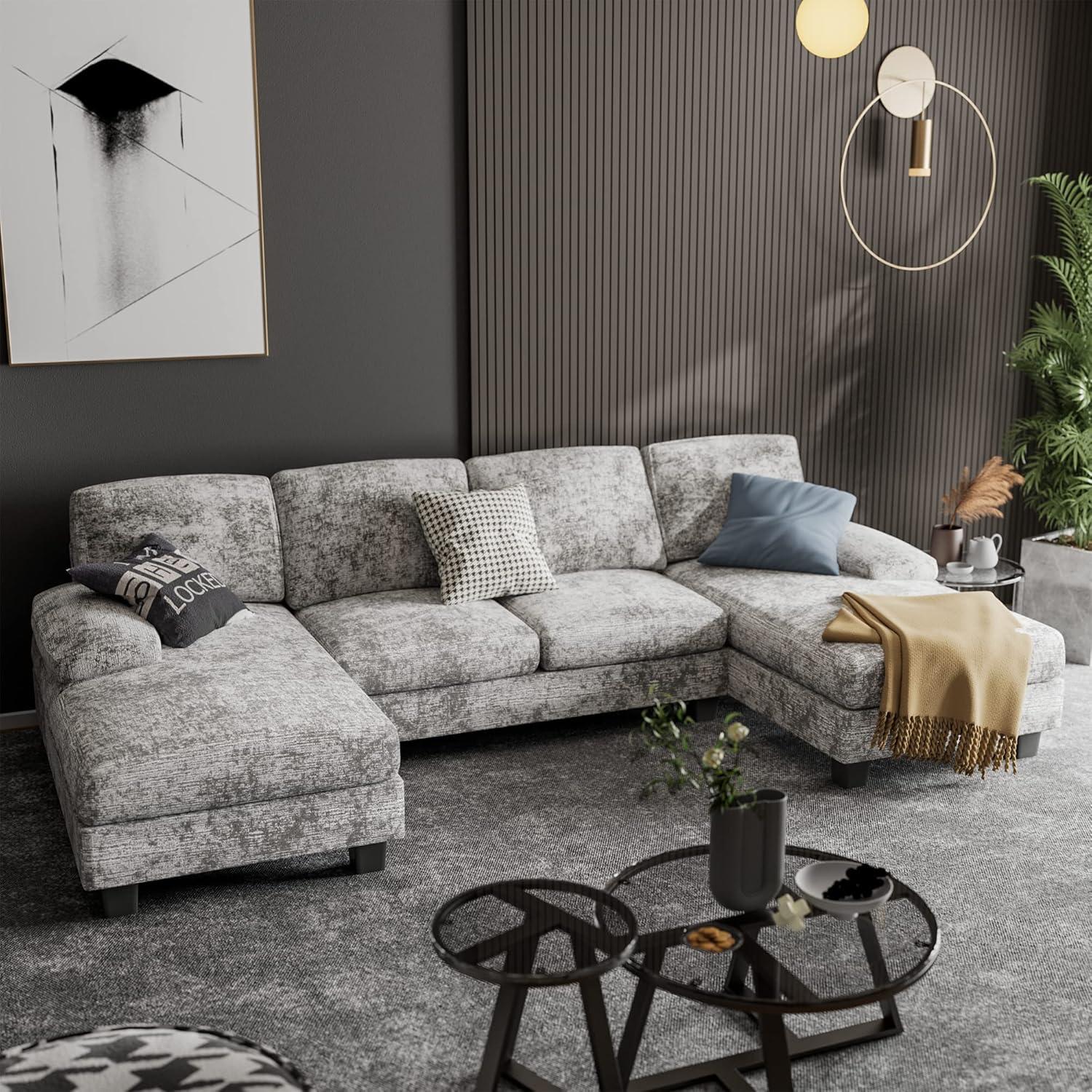
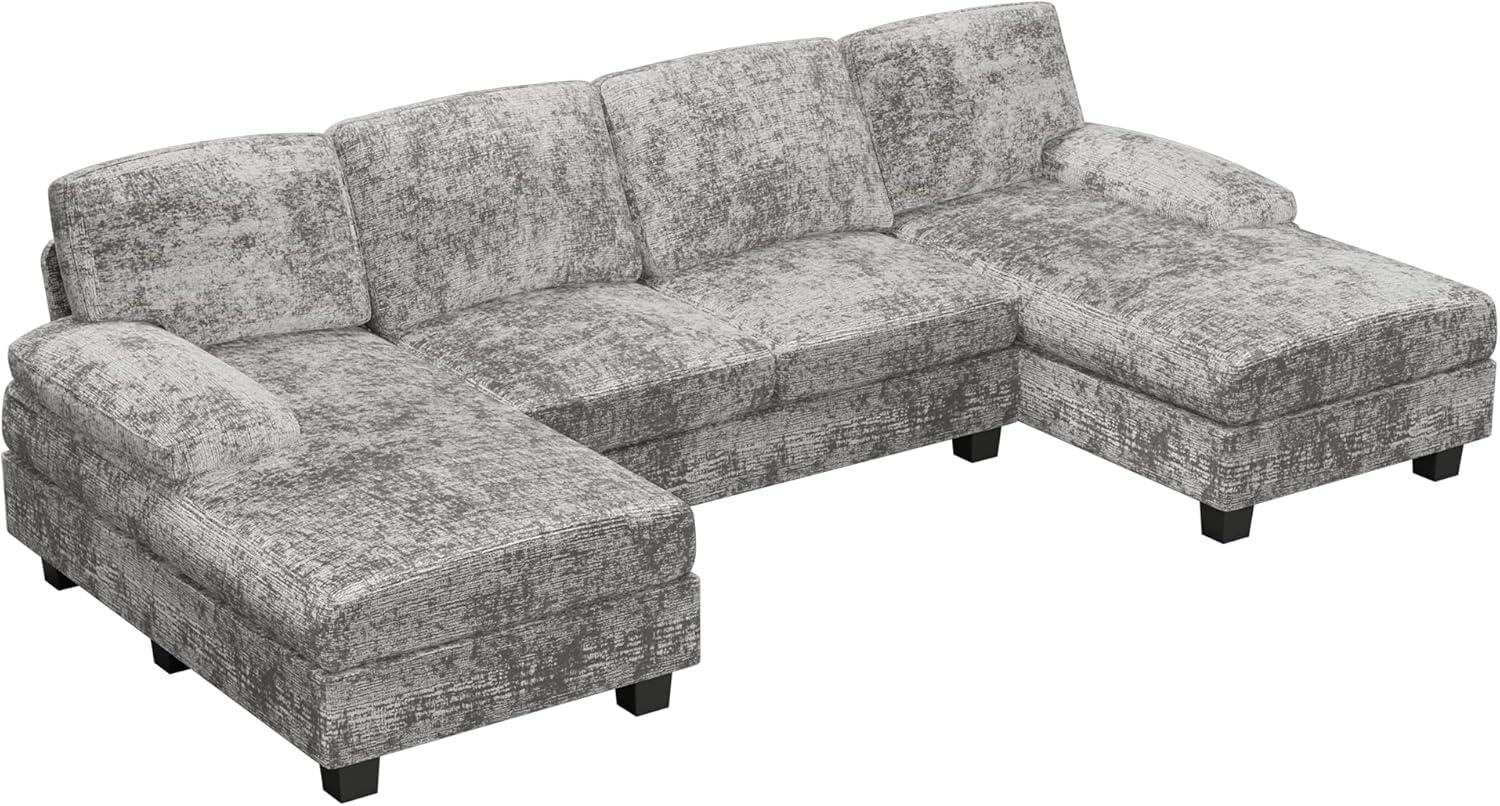
When you arrive in the room the sectional’s U‑shaped plan reads as a single block more than a cluster of pieces. From most sightlines the lines are low and horizontal, so the profile tends to emphasize width rather than height. The double chaise interrupts that horizontal band only slightly — it creates a subtle forward thrust where the cushions extend, and when someone sits or stretches out there the edge softens and the overall silhouette becomes less rigid.
Up close you’ll notice small, everyday shifts that alter the outline: smoothing a back cushion flattens a seam, someone leaning against the arm compresses the upholstery and narrows the visible gap between modules, and fabric creases at the chaise ends can make those corners read darker or more pronounced. In motion the shape is rarely static; it can feel more compact after people sink into the seats, than regain a straighter profile once cushions are fluffed again. Light and viewing angle matter a lot—side views tend to break the composition into layered planes, while a more distant, frontal view reads it as a single uninterrupted mass.
| Viewpoint | How the silhouette reads |
|---|---|
| From the doorway | Dominant horizontal block that anchors the space |
| From the side | Layered planes: seat, back, chaise extension; seams and cushions create subtle breaks |
| From above or a landing | U shape is clear; negative space in the center frames the floor area |
What the fabric and frame tell you about build and the memory foam inside
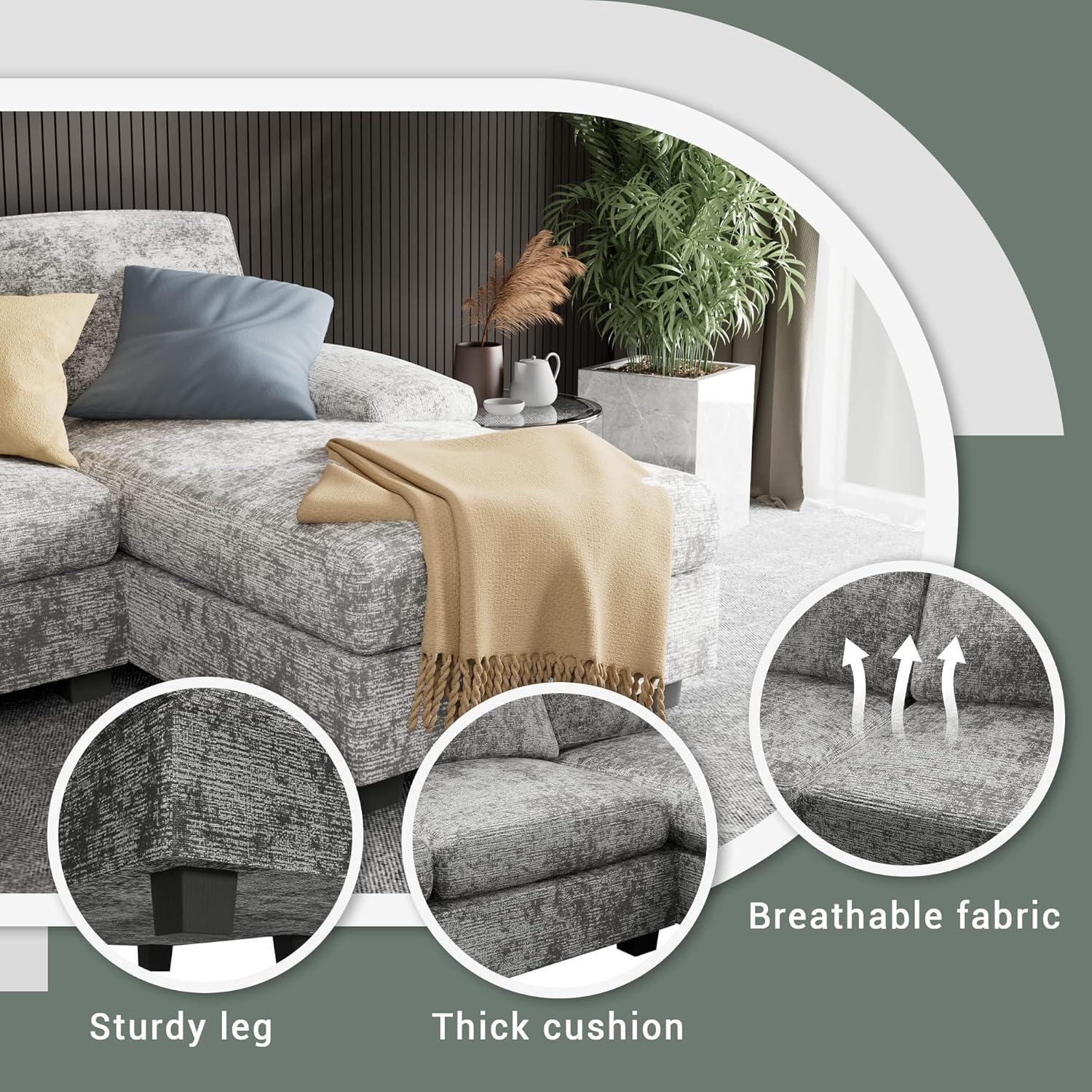
When you sit down and settle in, the fabric and frame give off a lot of quiet signals about what’s under the covers. the linen-like weave catches light and shows where the cushions are being worked most — small dimples and stretched threads near the edges tend to mark the places the foam compresses first. If the upholstery puckers around seams when you shift, the frame is transferring load through fixed points rather than flexing evenly. Your hands will notice that too: a taut seat surface with a firm edge usually follows a rigid rail or slat beneath, while a bit of uniform give across the seating plane hints at a continuous support layer under the foam.
Pressing into a seat and watching how the surface responds tells you about the foam’s behavior. A slow, gradual sink followed by a measured return feels like viscoelastic memory foam in action; a quicker rebound usually means a springier, lower‑viscosity core. Small, habitual motions — sliding forward to reach the coffee table, smoothing a corner with your palm, nudging a cushion back into place — reveal how the foam layers settle and how the frame holds its shape over repeated use.Over time, fabric wear and slightly deeper impressions in high-traffic spots can trace where the foam compresses most and how the frame supports or concentrates those loads.
| What you see or feel | What that can suggest about frame and foam |
|---|---|
| Taut upholstery with firm, defined edges | Stiffer frame elements or reinforced rails supporting the foam; less lateral give at the seat perimeter |
| Even, slow sink and gradual return on pressure | Viscoelastic memory foam or layered foams that contour before rebounding |
| localized puckering at seams after shifting | Load paths focused on frame joins or fasteners rather than a continuous support surface |
| Quick rebound and springy feel | Lower‑density foam or a more responsive core layer beneath a softer top layer |
Noticing these small, everyday interactions — the way fabric creases when you slide across it, the rhythm of a cushion settling back after you stand — gives a practical sense of build quality and the memory foam’s character without opening anything up. These cues tend to reveal how the sofa will behave in ordinary use and where the frame and foam are doing most of the work together.
How you sit, stretch, and sleep on it during everyday use

When you sit down, the seat gives beneath you in a way that encourages settling rather than perching. Your weight pushes into the cushions and the foam contours around your hips; the back pillows yield more quickly, so you tend to slide back and tuck into a relaxed posture. Small habits show up fast — you’ll find yourself smoothing the fabric along seams, nudging a seat cushion into alignment, or scooting a little closer to the chaise when you want to stretch out. Sitting upright for reading or working, the base still feels supportive near the front edge, while lounging deeper pulls you into a softer, more cocooned feeling.
Stretching out across the U‑shape or on one of the chaises alters the way the cushions compress: parts you press into flatten more,while adjacent panels remain slightly higher,creating subtle ridges at module joins. For short naps you can sprawl lengthwise with most of your legs supported; over a longer sleep the memory foam impressions become more pronounced and people often notice a gentle contour where they rest most. Cushions slowly rebound with movement, so shifting positions throughout the evening changes how the sofa cradles you — seams and tuft lines become more obvious after repeated use and cushions sometimes need a quick rearrange to restore an even surface.
Users tend to find that the double chaise invites feet-up lounging and that the modular joins shape how you sleep or stretch: they make wide, continuous surfaces possible but also introduce shallow channels that affect how evenly you lie. Over time habitual behaviors — sliding pillows, smoothing covers, fluffing seat cushions — are part of everyday interaction with the piece, altering the feel from the first sit to the hundredth.
View full specifications, size and color options
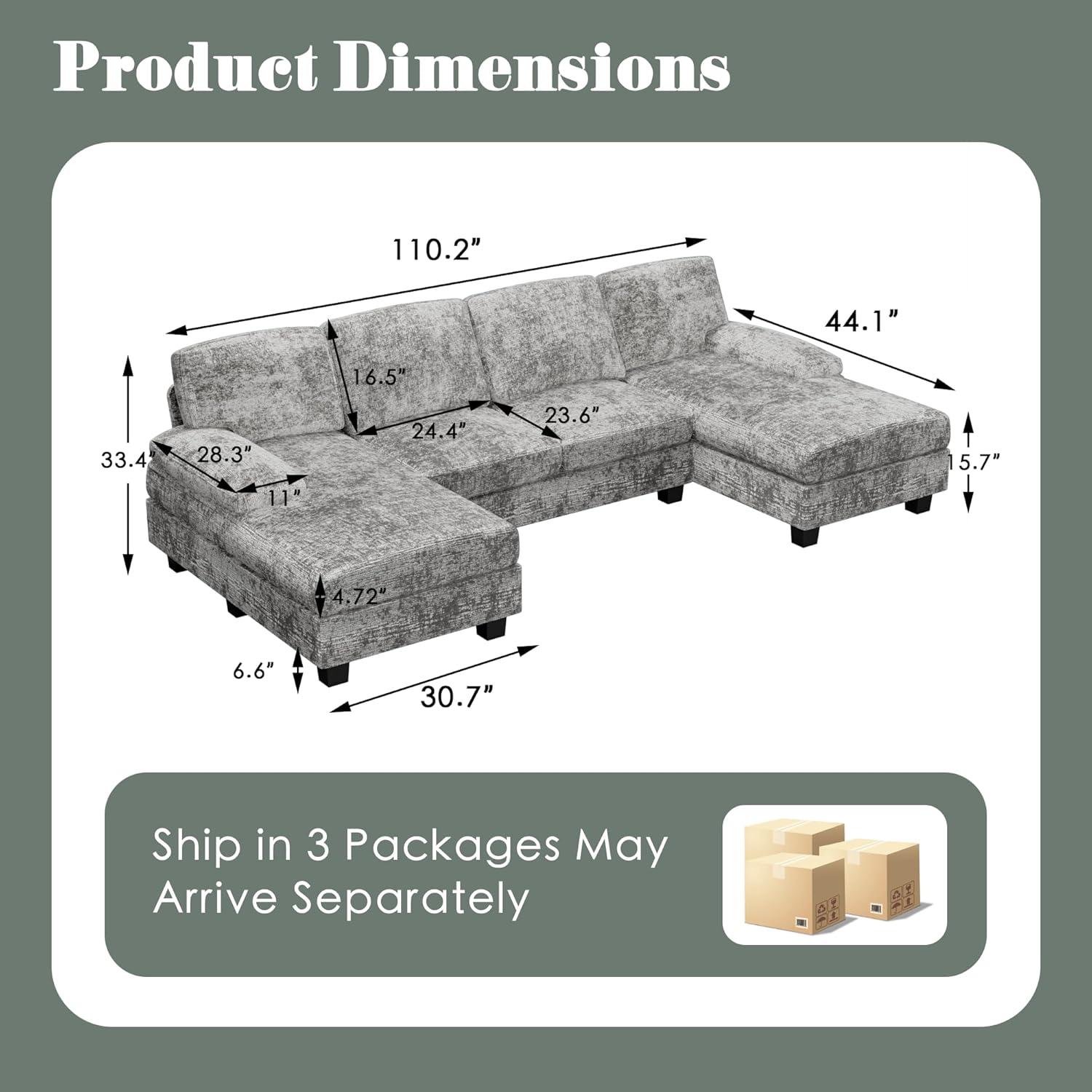
Measuring for your space with the sectional modules and chaise options
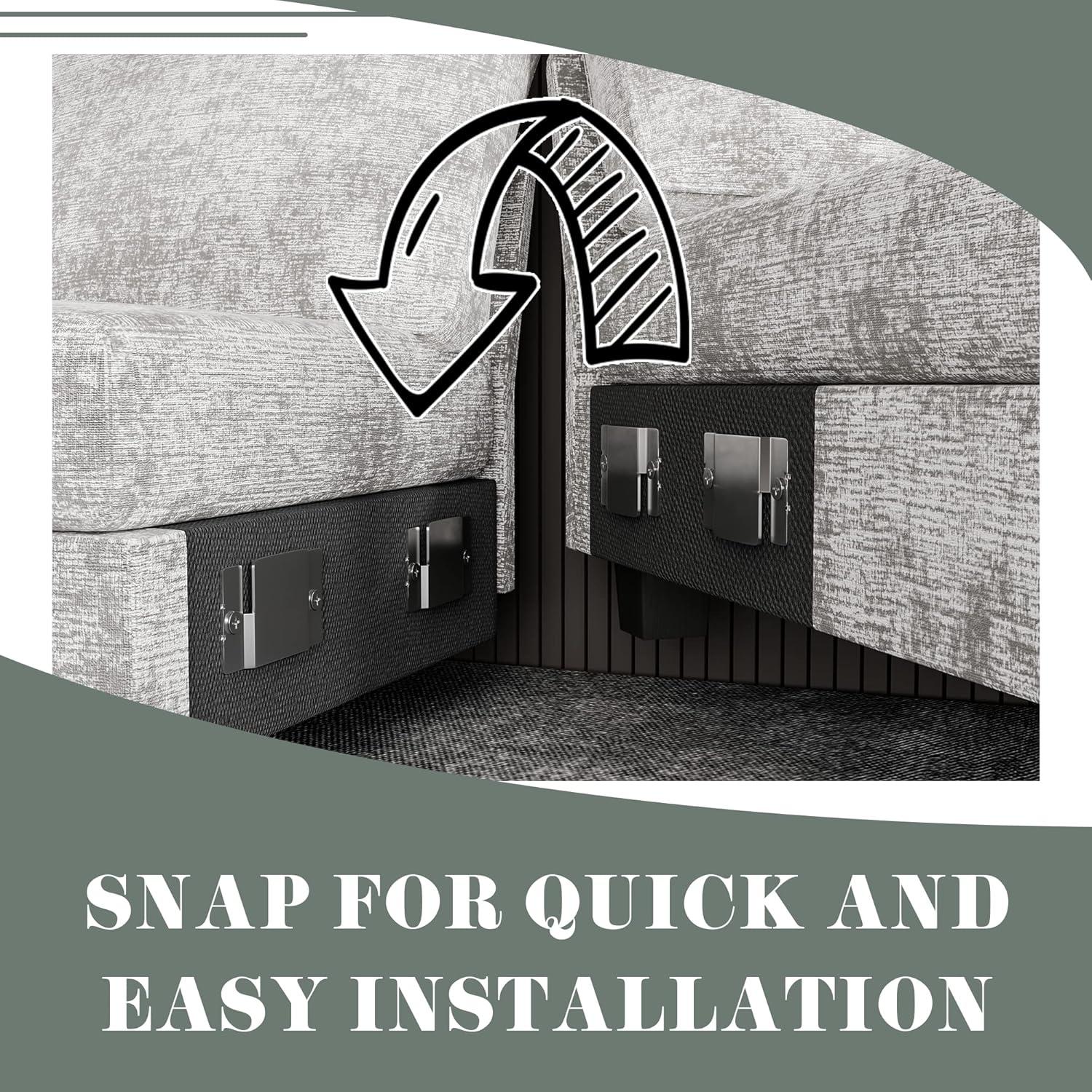
Before you pick a final layout, walk the room with a tape measure and the idea of the assembled pieces in your head. The U-shaped grouping and the double chaise options change not just overall width but where the bulk sits: placing a chaise against a wall leaves a long horizontal plane, while tucking it into a corner pushes that plane out into the room. As you measure, note the distance from the wall to the nearest traffic line — the chaise tends to reduce that clear path more than a single seat, and cushions will settle and shift a little after people sit on them, so a few extra inches of clearance often feel necessary in practice.
Also measure the routes the modules must take to get to the room. Doorways, elevators, stair landings and tight turns are the practical gatekeepers; the modules arrive in boxes and you’ll be moving pieces, not one finished sofa. After unpacking the vacuum-packed cushions they expand over the first day or two, which can change how snugly the sofa fits against a wall or into a niche. When you imagine the final placement, picture yourself smoothing seams and nudging modules together — those small adjustments affect how tightly the unit sits against baseboards or around table legs.
| What to measure | Where to measure it | Why it matters |
|---|---|---|
| Entry width and turning clearance | Door frames, stair turns, elevator interior | To know whether modules can be carried in without disassembly |
| Room footprint (width × depth) | From wall to wall and across the intended seating area | To estimate how the U-shape and chaise will sit in the space and affect sightlines |
| Clearance behind chaise | Wall, baseboard, or passage adjacent to chaise | Because the chaise often reduces usable walkway and may bump skirtings when nudged |
| Ceiling height & obstacles | Light fixtures, low shelves, window sills | To avoid scraping while moving modules and to ensure visual balance once placed |
Once modules are where you want them, live with the arrangement for a short while: you’ll find yourself shifting a cushion, sliding a module a few inches, or swapping chaise sides because it changes how you pass through the room. Those small,habitual tweaks are part of the real measurement process — the space tolerances you note on paper rarely match the way people actually sit,stand,and move around the completed sofa.
How you put it together and rearrange the pieces when you move them around
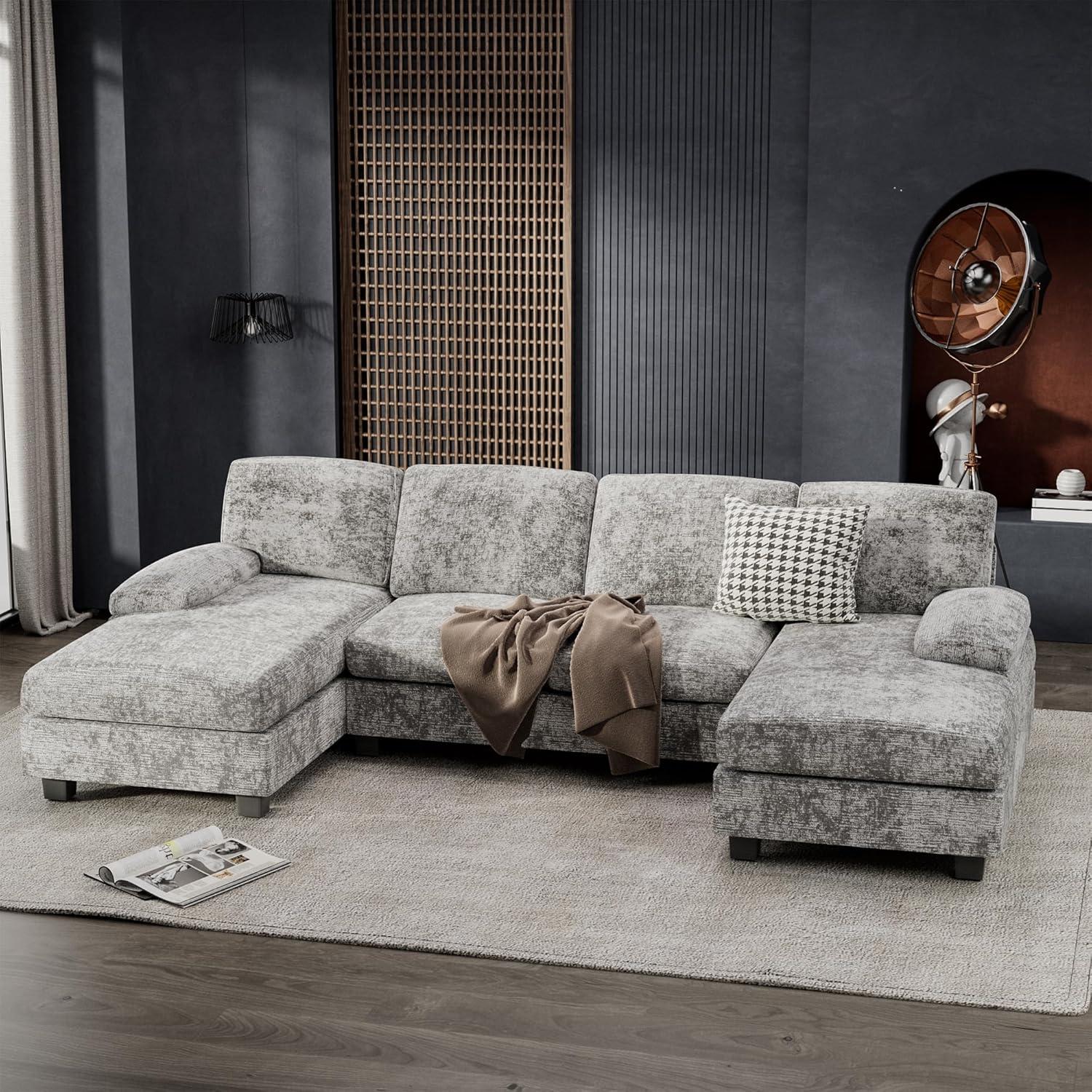
When you take the pieces out and start moving them, the work feels more like arranging furniture than wrestling with parts. You tend to pick up modules from their base and not from the cushion tops; the connectors tucked under the frame line up with a little nudging and a distinct click when they engage. Sliding a chaise into place produces a soft thud as the frames meet, and you’ll find yourself smoothing fabric and shifting cushions afterward — seams ride a bit as the sections settle into a new position, and the soft covers wrinkle where they rub against each other.
Reconfiguration rarely requires tools once the legs and any fasteners are seated. Rotating a corner or swapping the double chaise from one end to the other is a matter of unhooking, sliding, and re-seating the modules; at first you notice tiny gaps that you’ll close by nudging the pieces together, then readjusting the back cushions so their lines match. Moving the larger pieces over carpet can feel like a drag and sometimes makes you steady the cushions as you shift, while hardwood floors let the modules glide more smoothly. In most cases you end up doing small, unconscious tweaks — tucking a cushion edge back under, straightening a seam — until the shape looks coherent in the new layout.
How it matches your expectations and the limitations you might encounter
On first use, the cushions tend to behave much like expected from a modular, foam-filled sofa: the vacuum-packed pads decompress over the first day or two, and the seating surface softens slightly as body heat and movement settle the foam. The linen-like cover can feel cool at the start of a sitting session but often conforms and warms where someone has been reclining, and the back cushions usually respond to a quick reshuffle — smoothing fabric and nudging seams into place becomes part of normal use.The double chaise arrangement keeps its shape for short to medium periods of sitting, though repeated shifting and repositioning can reveal small gaps at joins that users commonly press together when lounging.
Over weeks of regular use, a few trade-offs become visible. High-contact zones tend to show subtle compression and softer contours compared with less-used areas, and cushion surfaces develop faint creases that are smoothed out with occasional adjusting. Removable covers make cleaning a practical option, but repeated washing can alter the feel of the fabric and requires reseating the cushions afterward to restore their original fit. The modular connections and seams hold up under normal movement but can need repositioning after heavier jostling or frequent reconfiguration; small noises or slight shifts are not unusual as the pieces settle into daily patterns.
View full specifications and available color and size options on Amazon
how you care for the fabric and handle maintenance in daily life
You’ll probably find maintenance settles into small, unconscious habits: smoothing the back cushions after someone gets up, nudging a seam that’s slipped, or flipping a cushion to even out impressions. The woven fabric tends to catch crumbs and pet hair in everyday use, so a quick pass with a soft-brush vacuum attachment or a lint roller often becomes part of your weekly routine. when you move the sections to clean underneath, the modules shift a little and you’ll straighten them again by feel rather than measuring.
For spills and deeper cleaning, the covers are made to come off, and you can unfasten the zippers under or behind the cushions. Many people machine-wash covers on gentle settings and let them air dry; high heat can change the feel of the fabric and, over time, speed any slight shrinking. The foam cores are not submerged—spot-cleaning is the usual approach for cushions themselves, and you’ll notice the foam regains shape as it rests.
| Typical care step | Observed approach |
|---|---|
| Daily | Brush or vacuum with upholstery tool; smooth cushions |
| Spot-cleaning | Blot spills quickly; mild detergent and dab, not rub |
| Washable covers | Gentle cycle, cold water; reshape and air-dry or low tumble |
Over longer stretches of use, you’ll notice predictable changes: areas of frequent contact can darken slightly as oils accumulate, and prolonged sun exposure can soften or fade the hue. You’ll also find that keeping the sofa away from open flames and strong heat sources matters for everyday upkeep—the fabric reacts if exposed to high temperatures. Small adjustments,like swapping which section gets the most use or giving cushions a little plump now and then,will help the set look and sit more consistently over time.
How It Lives in the space
Living with the Furniwell Convertible Sectional Sofa Couch, 4 Seat sofa Set for Living Room U-Shaped Modern Fabric Modular Sofa sleeper with Double Chaise & Memory Foam (Fabric, Grey) makes you notice how a piece quietly changes the way the room is used over time. In daily routines it shifts from a centerpiece to a cluster of familiar landing spots — a chaise for slow afternoons, a corner that holds a habitual seat, sections nudged into new positions as needs arise. Surfaces soften where you sit most, small creases mark repeated evenings, and the couch’s presence settles into the background of regular household rhythms. It becomes part of the room and stays.
As an Amazon Associate I earn from qualifying purchases.

