


Velvet catches the late-afternoon light and feels cool when you sweep your hand across the tufted back, a first, tactile note that sets the room’s mood. This is the Eafurn 3-in-1 Convertible Pull-Out Sleeper Sofa, but in the space it reads more like a low, broad loveseat with hidden mechanics — you spot the seam where the frame tucks away and hear the quiet give of rollers as it slides. From short range it has a visual weight that anchors the seating area; up close the cushions push back with a dense, springy resistance and the padded arm feels deliberately considerable under your elbow. Little details — a side pocket catching the newspaper, the soft pillows slightly flattened from use — make it look lived in rather than staged.
how it looks when you bring it into your room unpacking and scale
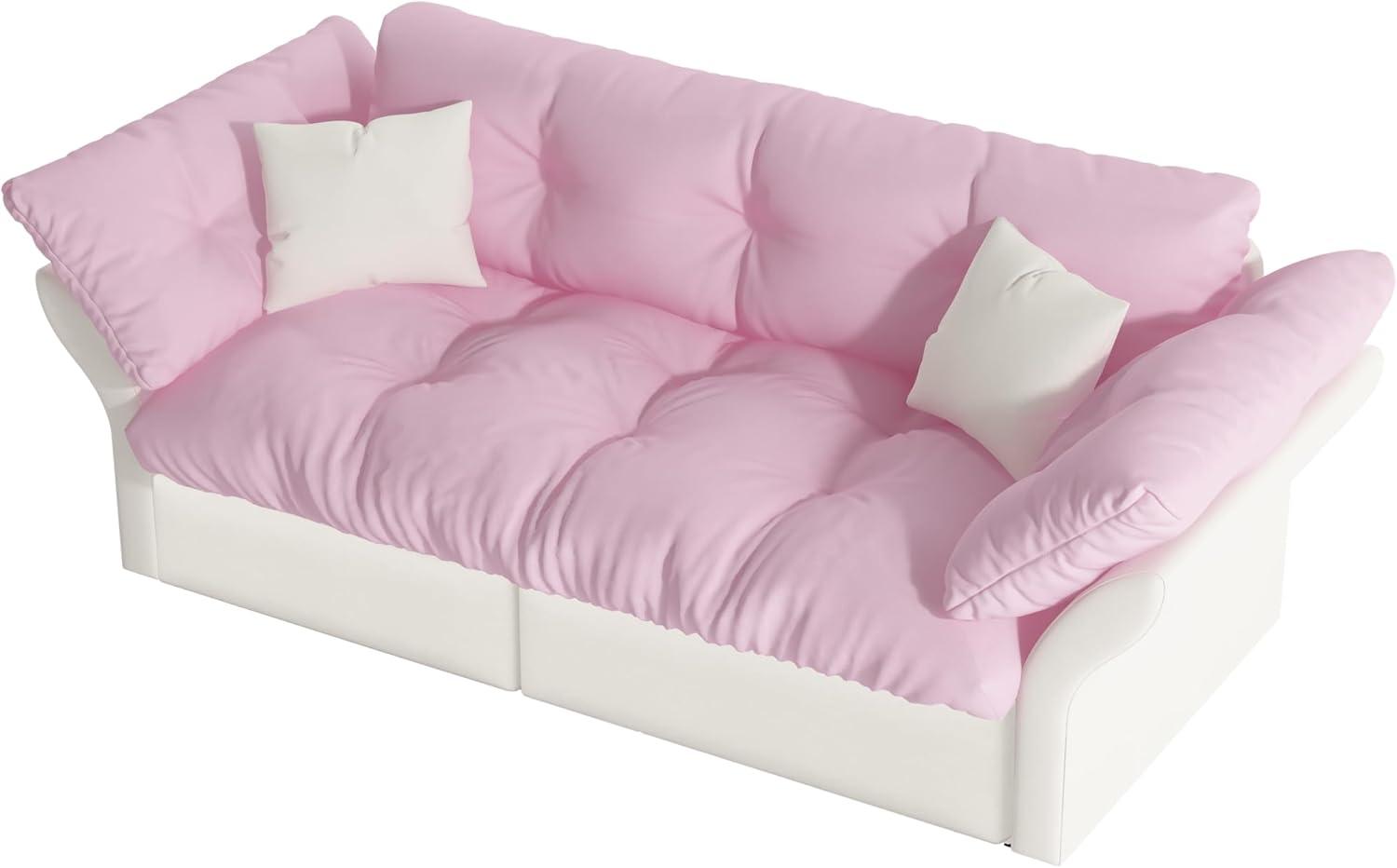
Unpacking starts with a long, flat box that takes up a corner of the room; when you open it, the main pieces come out folded and stacked rather than spread out. As you peel away the protective layers the velvet shows a soft nap that catches light differently depending on how you hold each panel. Cushions and pillows sit slightly compressed at first and then plump back as you unroll or refasten them, and you’ll find yourself smoothing seams and nudging tufted buttons so the surface reads even across the seat and back.
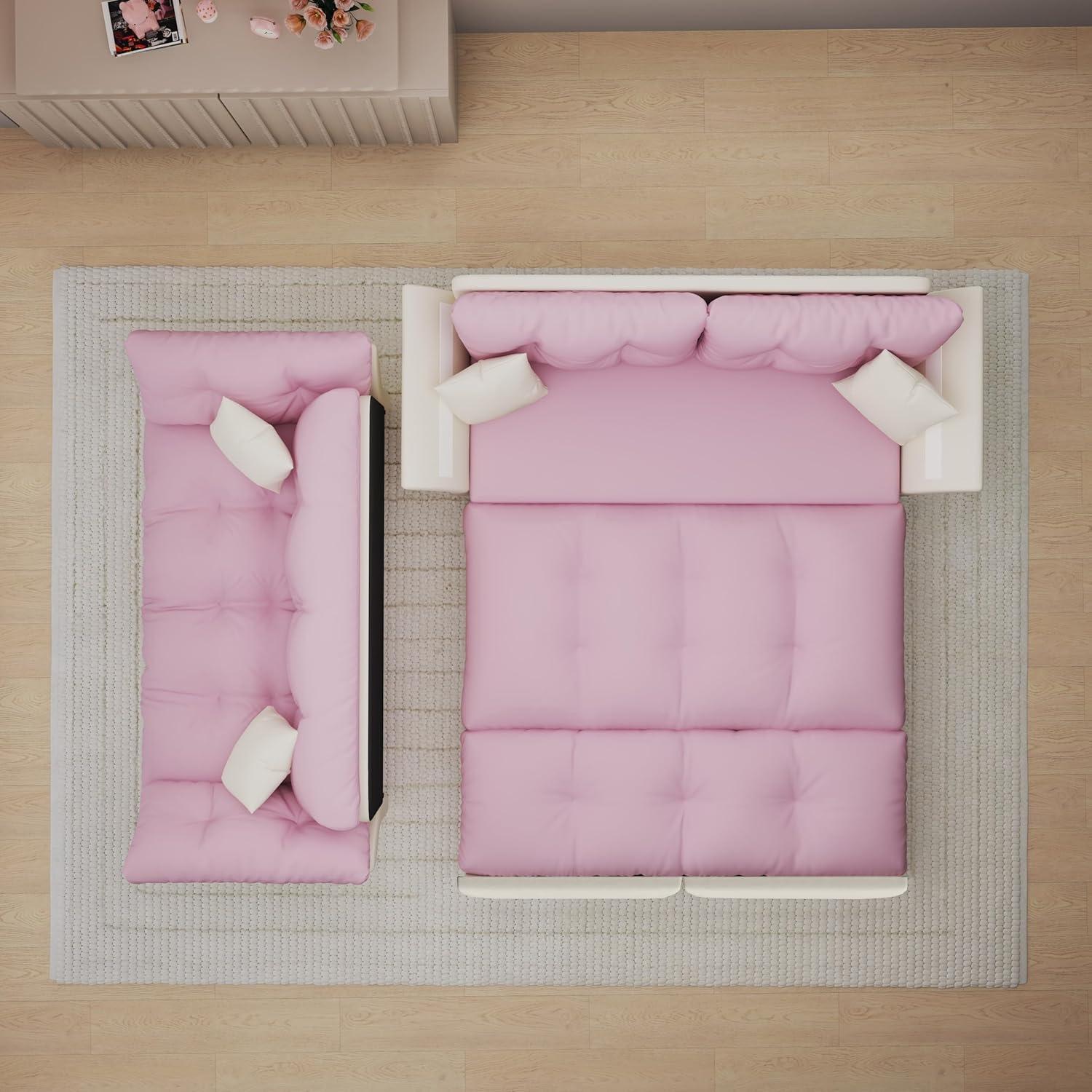
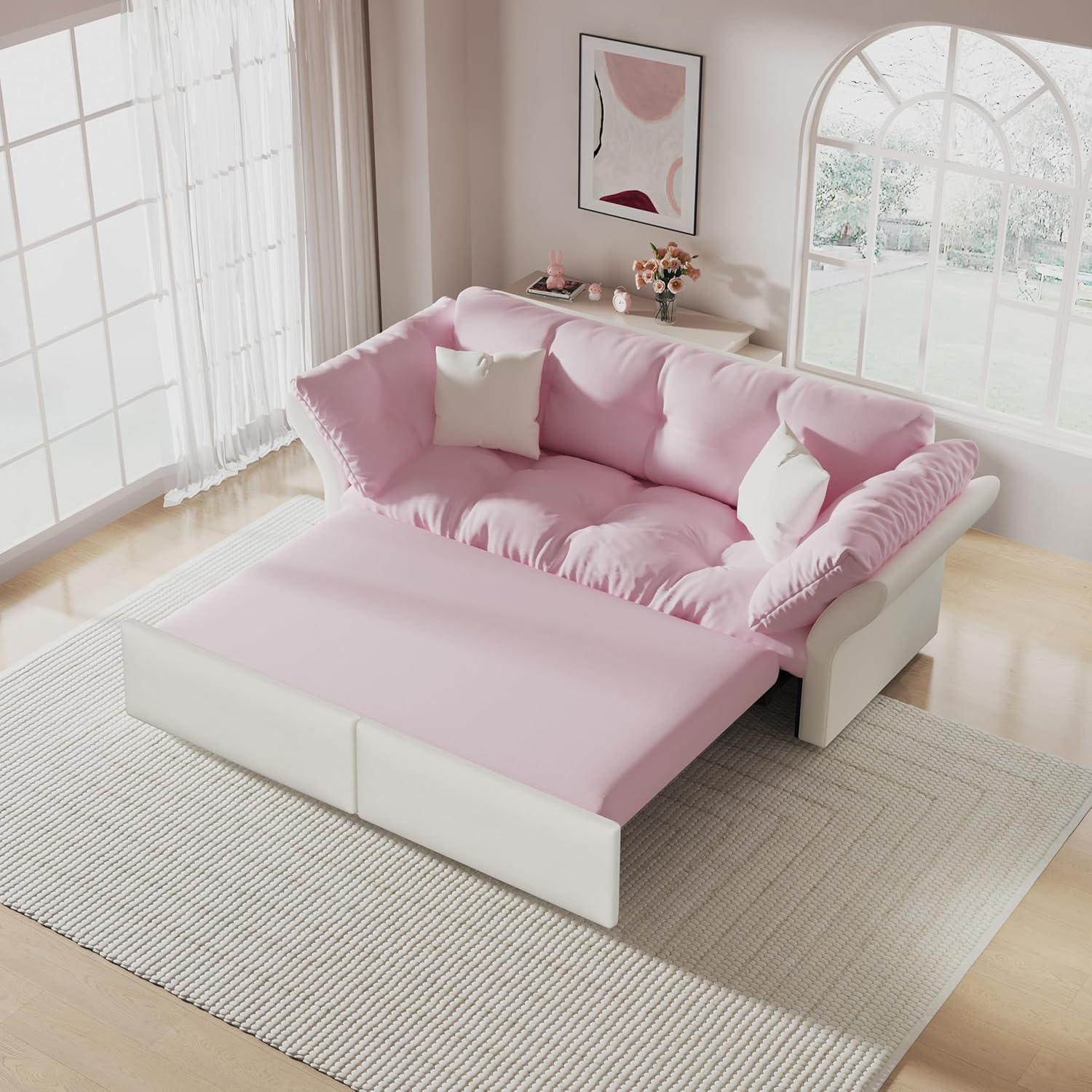
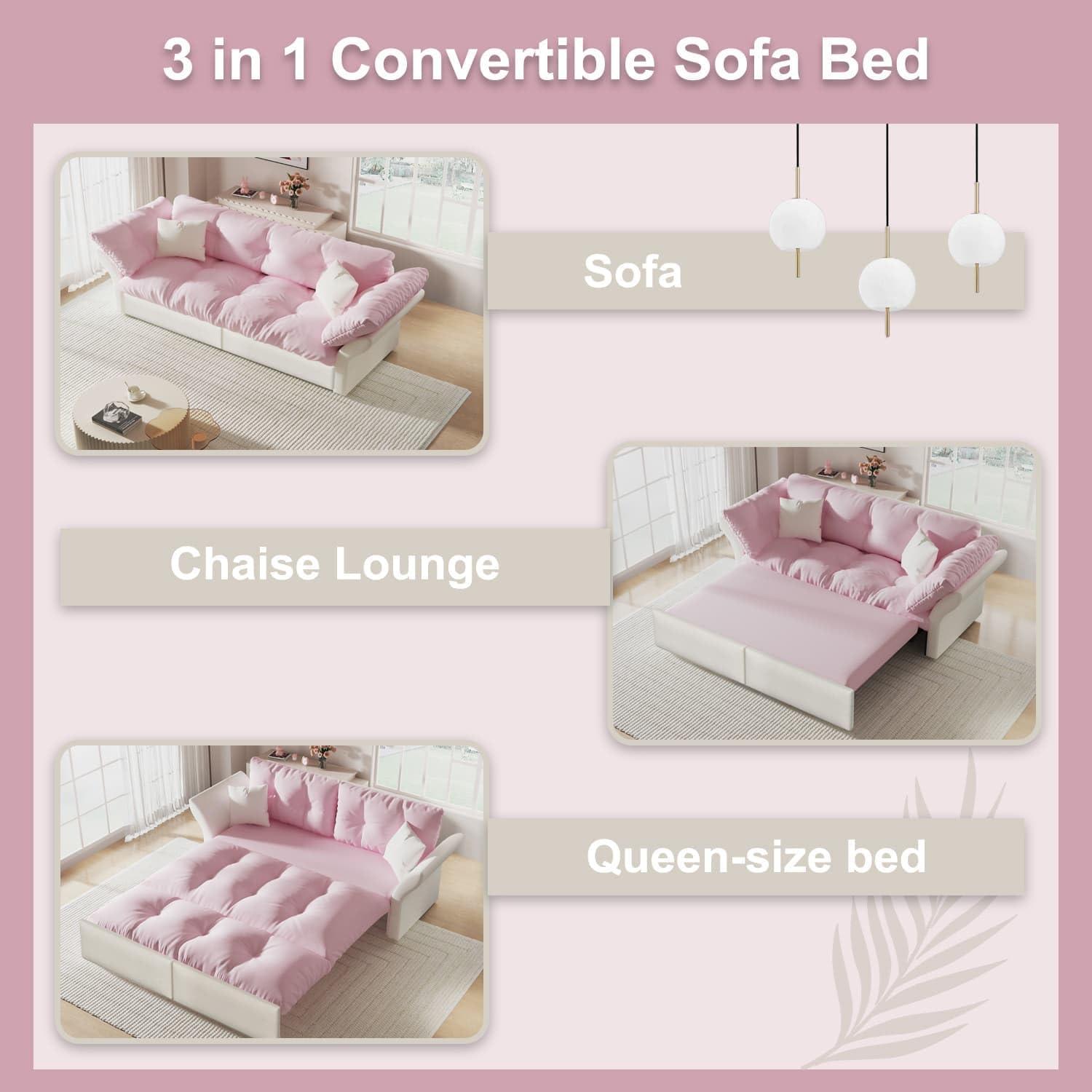
Set up in sofa mode, it reads as a low, horizontal element — not towering, but visually substantial along whatever wall it touches. Pull it into chaise position and one side visibly extends the seating plane,creating a longer silhouette that pulls attention across the floor. When fully pulled out, the folded frame and mattress change the room’s center of gravity: what was a background piece now occupies foreground floor space and becomes the largest single surface in view.The metal legs and the thin gap they create under the frame give a slight visual lift, preventing the piece from looking like an uninterrupted block on the floor.
| Mode | How it typically reads in the room |
|---|---|
| Sofa | Low, anchored against the wall; creates a clear seating edge |
| Chaise | Stretches the sightline; makes one side feel dominant in the layout |
| Pull-out bed | Fills floor space and becomes the visual focal surface |
Small, everyday adjustments are part of the first few hours: you’ll shift pillows, tuck the removable backrest slightly to hide seams, and notice the velvet nap showing fingerprints or light marks until it settles with use. For some rooms the piece reads as a single unified element; in others the conversion mechanisms and extended profile make the conversion unmistakable as soon as you unfold it.
The tufted velvet silhouette and armrest details you notice at a glance
From across the room you first register the tufted velvet as a soft, interrupted plane—little hollows and raised nodes that catch the light differently depending on your angle. Up close the tufts form a shallow grid that breaks the sofa’s boxy outline into a series of pillowed panels; when you walk past, the velvet’s nap shifts and some tufts read darker or lighter, so the silhouette never sits completely static. If you settle onto the seat, those same tufts yield under your weight, the dimples widening where you sink and the surrounding velvet smoothing as you unconsciously pat or straighten it.
The armrests present themselves as compact,cushioned termini to that tufted field. Your forearm finds a gently rounded top that compresses and springs back, revealing faint seam lines where the cover meets the frame.A shallow fold tends to form at the inner corner after a few sits, and if you tuck an elbow there repeatedly the fabric shows a soft, lived-in crease. If there are pockets or stitch details along the outer face of the arm, they appear as practical interruptions to the velvet—slightly looser areas that sag a touch when occupied and snap back when left untouched, making the armrest read differently from one moment to the next.
What the frame mechanism and upholstery are made of and how they feel to the touch
When you run your hand over the upholstery, it’s the velvet that greets you first: a short, dense nap that shifts slightly with each stroke. One direction feels darker and smoother, the other a touch lighter and slightly raised — the typical velvet “change” that shows fingerprints and brushing. The tufting forms shallow channels and small dimples under your fingers, so you’ll find yourself smoothing seams or patting down the stitched buttons to even out the surface. The armrests and seat edges give a layered feel: a soft outer velvet, then a padding that compresses with a notable but not instant rebound, and finally firmer resistance where the internal support sits.
Below the fabric, the structure is metal and plywood; you can sense it indirectly as you press or lift. Along the base and inside the pull-out mechanism the metal feels cool to the touch if exposed, and any plastic trim is smoother and slightly warmer under the skin. As you pull the frame out, the rollers and hidden wheels move under your palm — there’s an immediate tactile feedback of rolling resistance and then a steady glide as the frame extends. Where the plywood and frame meet the cushions you’ll notice firmer edges and crisp seams; the included pillows feel looser and cotton-stuffed, offering a fluffier, less taut surface than the seat cushions.
| Component | Primary material | How it feels to the touch |
|---|---|---|
| Upholstery | Velvet | Short nap that changes colour and texture with a stroke; soft,slightly plush |
| Cushion interior | High-density foam / cotton filling (pillow) | Compressed give with gradual rebound; pillows feel fluffy and looser |
| frame & mechanism | Steel/iron tubing + plywood,metal and plastic legs/rollers | Cool,solid under exposed metal; moving parts give rolling resistance then smooth glide; edges feel firmer where support sits |
How the cushions soft pillows and chaise align when you sit or lie down
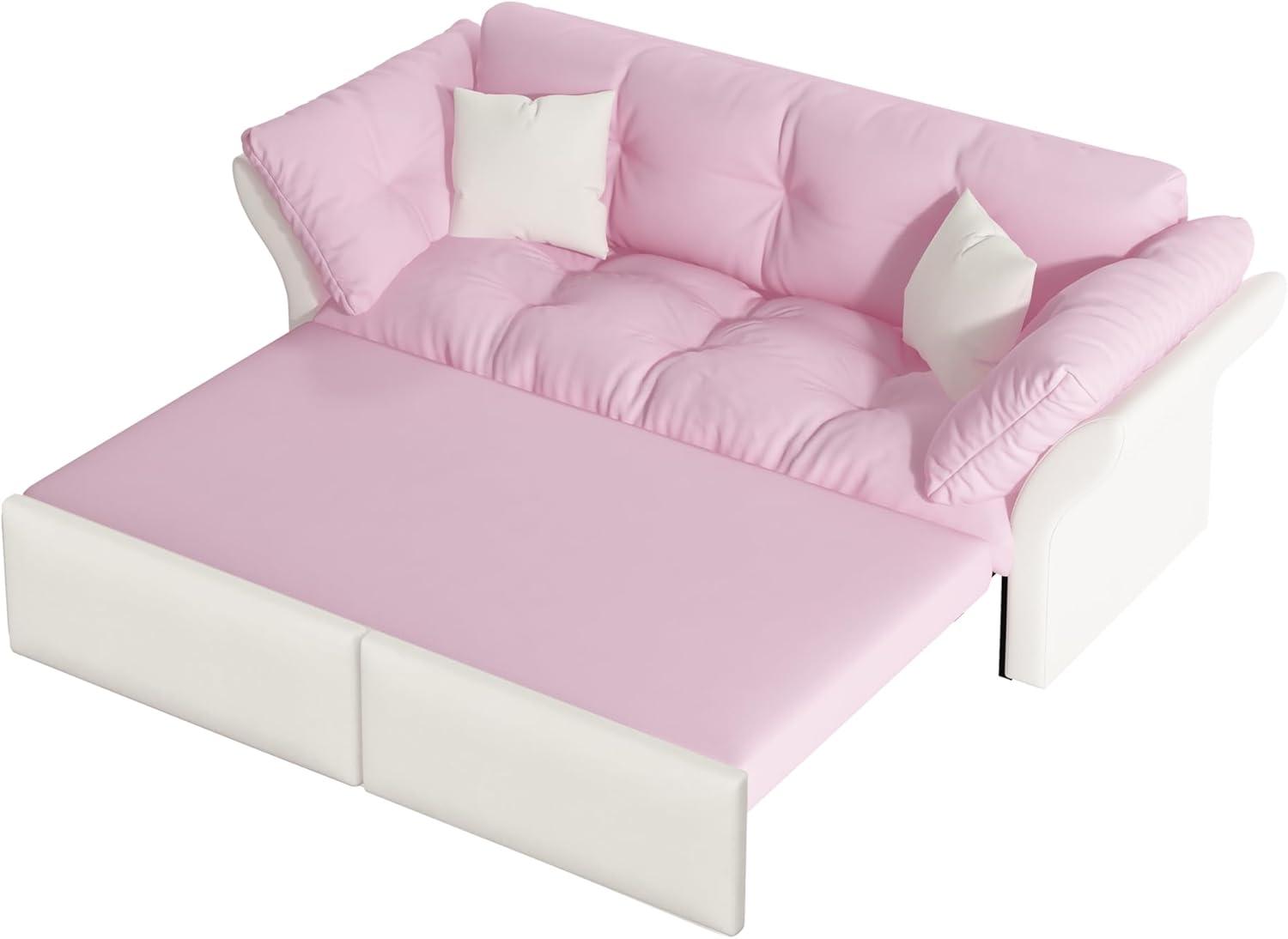
When you sit, the seat cushion compresses under your weight and the two soft pillows settle against the tufted back—frequently enough a little lower than where you expect, so you find yourself nudging them up or tucking them behind your lower back. In the chaise position (the frame partially pulled), the extended mattress section meets the seat cushion at a visible seam; as you shift your legs forward the cushions compress together and fabric stretches slightly across that joint, so you may smooth the cover or realign a pillow to bridge the small ridge.The armrest and side pockets stay put, and the pillows tend to slide toward the arm you lean on, creating a lopsided support until you shift them back or press the cushions flat again.
When you lie down fully, the cushions and pillows mostly flatten into a longer surface, but familiar behaviors appear: the tucked tufting makes small hollows that the softer pillow filling sinks into, and the fold where the pull-out meets the seat can produce a faint ridge beneath your midsection that you instinctively cover with a pillow or shift over. The two included pillows compress and spread out under your head or along your shoulders as you change position, and fabric creases move with you—sometimes a seam aligns under your hip, other times it settles nearer your shoulder. Small adjustments—smoothing a cushion, sliding a pillow an inch—are a regular part of getting the alignment you want when switching between sitting, lounging, and lying down.
How it occupies your floor plan measuring reach depth and seat width
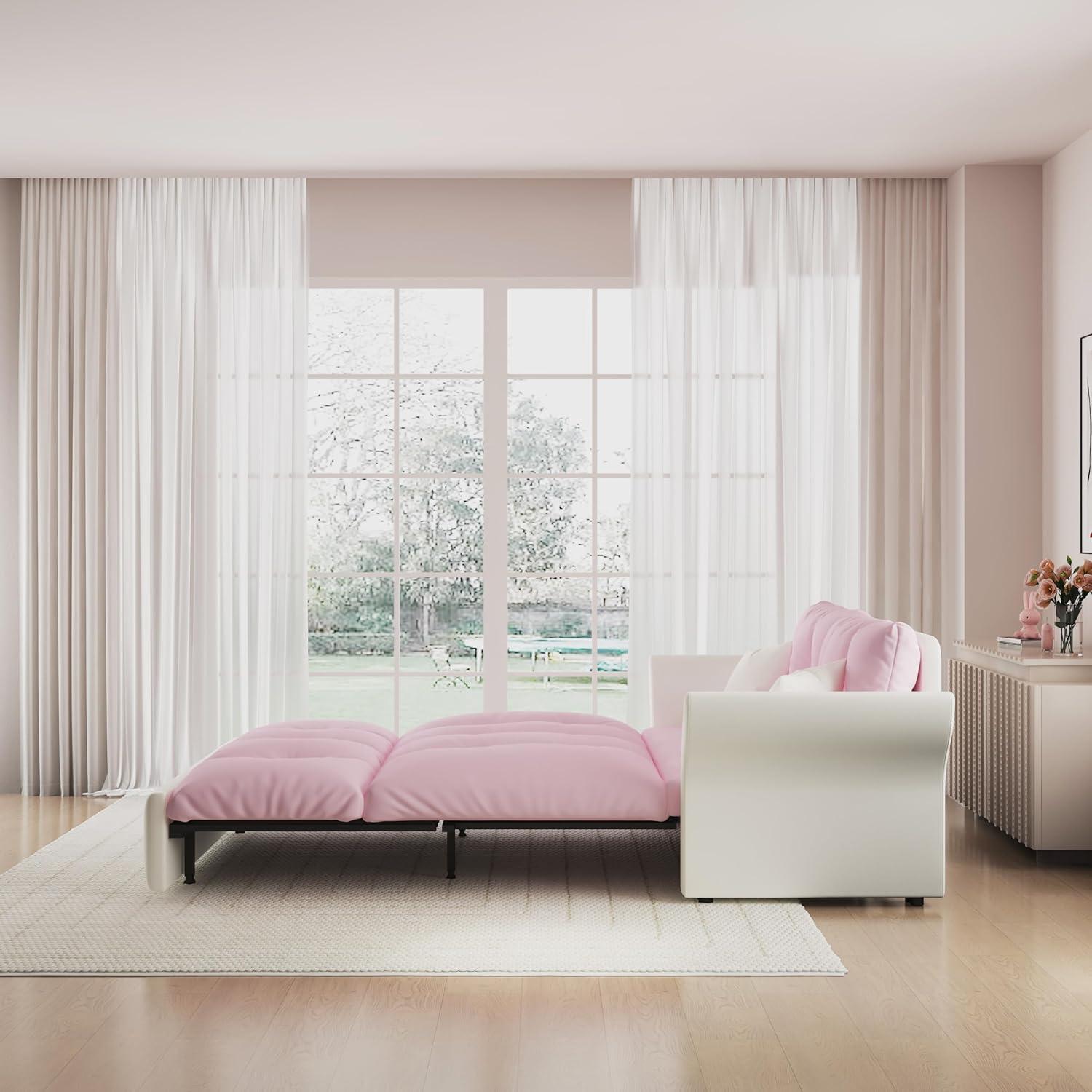
When it sits upright, you’ll notice the couch’s front edge lands closer to the room’s traffic line than the frame reading suggests — the back cushions compress a little when you settle in, so the effective reach from the wall to where your knees find the front edge is a touch shorter than the overall depth. The armrests and the two included pillows eat into the lateral space, so the clear span you can actually sit on feels a few inches narrower than the couch’s full width; you’ll find yourself smoothing seams or tucking cushions to reclaim that last strip of seating now and then.
Pulling the hidden frame out changes how it occupies the floor in a single motion: a partial extension becomes a chaise that pushes the footprint forward by a noticeable amount, and a full pull converts the whole unit into a bed that stretches well into the room. The mattress and frame sit nearly flush with the front of the cushions but add bulk underfoot, so a coffee table or ottoman that felt at a cozy reach with the sofa upright often needs to be shifted. Fabric shifts and tiny creases appear where the cushions slide; you’ll likely smooth and reposition the backrest each time you change modes.
| Configuration | Approx. reach / depth (wall to front) | Approx. usable seat width (between arms) |
|---|---|---|
| sofa (upright) | About 33–34 inches | roughly 55–58 inches (pillows reduce usable span) |
| chaise (partially extended) | About 50–65 inches, depending on extension | Seat width unchanged side-to-side; forward reach increases |
| Bed (fully extended) | About 79–81 inches from back to foot | Mattress sleeping width ≈ 58 inches; armrests remain outside mattress |
These figures are a practical snapshot rather than precise engineering specs — small variations show up as you shift cushions, pull the frame, or tuck pillows. In everyday use you’ll become familiar with the clearances you need to leave in front of the piece for conversions, and with how the seat width feels once pillows and seams have been nudged back into place.
Daily scenarios you might use it for from lounging and working to overnight guests
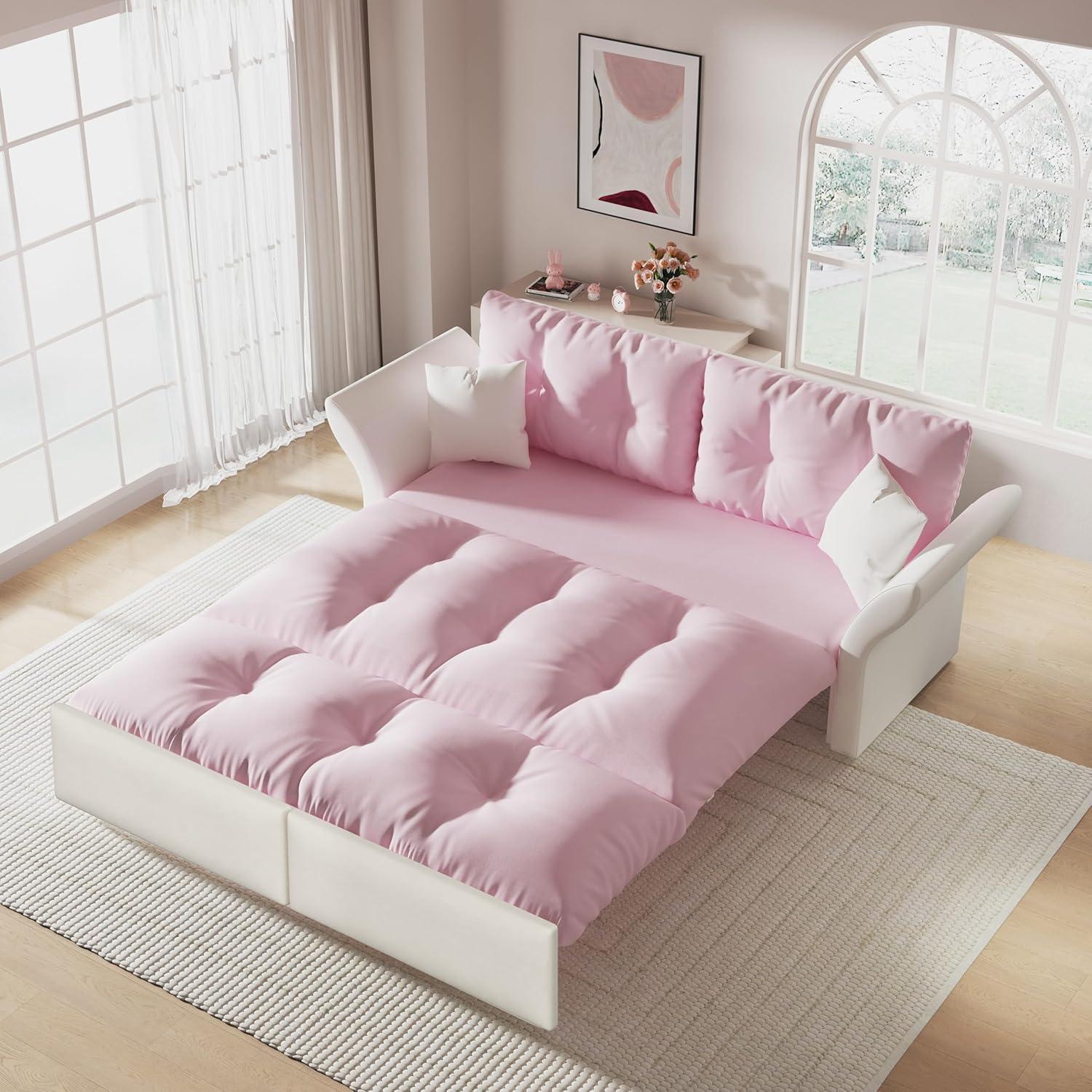
In everyday living, the piece tends to shift roles several times a day. During low-effort lounging it settles into a casual seat where the back cushions compress a little at the hips and the armrests collect a thrown blanket; people frequently enough smooth the velvet with a hand before leaning back. When converted into the chaise position, the extended surface invites a sprawled posture — knees bent, one foot tucked under — and cushions will compress differently along the seam where the frame extends, so pillows get nudged into new spots. The side pockets commonly serve as a catch-all for remotes, a paperback, or a phone charger; the armrest area is frequently used as an impromptu laptop perch for short sessions, with occasional slight tilting as weight shifts.
Overnight use unfolds more like a sequence of small adjustments. Guests tend to reposition the included pillows under the head and at the lower back, and a light smoothing of the cover is typical after the first few hours as the fabric shifts with movement. The sleeping surface can settle unevenly in places after extended use, producing minor folds that are usually corrected by shifting bedding or re-centering the mattress. In most cases people make these modest fixes rather than large rearrangements — a rapid tuck here, a pillow swap there — and the unit performs as a multi-use surface through an evening of rest and the next morning’s coffee.
| Scenario | Typical posture | What usually gets adjusted |
|---|---|---|
| Lounging | Upright or slightly reclined; feet on floor or tucked up | Back cushions smoothed; blanket shifted |
| Working briefly | Semi-upright with laptop on lap or armrest | pillows repositioned for lumbar support; side pockets used for accessories |
| Overnight guests | Supine, sometimes side-lying | Pillows moved under head/hips; bedding smoothed to reduce seams |
View full specifications and options
How it matches your expectations and where it reveals practical limitations
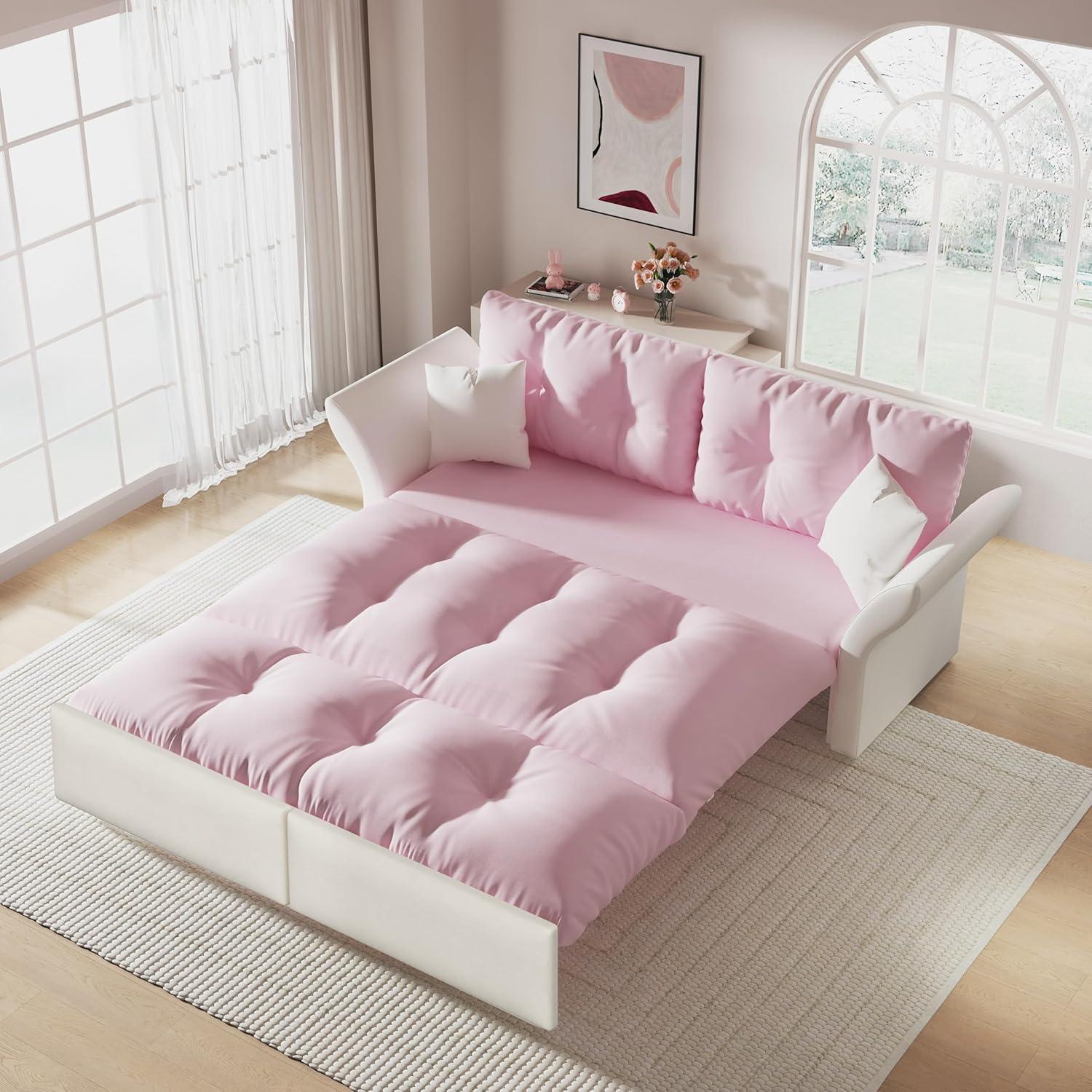
Observed in everyday use, the piece generally behaves as advertised: the pull-out frame glides with a predictable motion, the velvet surface presents as soft to the touch, and the cushions settle into a familiar shape after the first few hours of sitting. The hidden mattress unfolds into a flat plane that supports lying down without dramatic sagging,and the included pillows restore some loft when rearranged. Small habits emerge quickly — smoothing the fabric after someone gets up, nudging a cushion back into place, or tucking the arm pocket flat when it bulges from holding a remote — and those actions become part of routine use rather than exceptions.
Practical limits appear most clearly in moments of movement and transition. The conversion mechanism tends to need a intentional pull and occasional realignment at the corners; it is quiet for the most part but can catch on thresholds or thick rugs. When fully extended, the seam where the sections meet is noticeable under lighter bedding and may require frequent smoothing if someone shifts a lot during sleep. Removable covers unzip and refit,though the zippers can feel stiff at first and the covers tend to shift a bit until the foam settles in over several uses.Over time, repeated sitting near the edges shows slight compression patterns along high-traffic zones and a faint creak can develop at hinge points after extended use.
| Expected behavior | Observed in daily use |
|---|---|
| Smooth, noise-free conversion | Mostly smooth and quiet; occasional resistance when crossing thresholds or adjusting corners |
| Even sleeping surface | Generally flat; central seam and padding compression become noticeable with movement |
| Stable upholstery fit | Covers and cushions settle after use but may need periodic smoothing and zipper nudging |
View full specifications and color options
Assembly pockets care and the small details you live with over time
Over the first weeks you notice the little hollows where the frame and upholstery meet — the assembly pockets that tuck over bolts and joints. Those niches collect crumbs, stray hair, and the occasional lint ball; when the sofa shifts or the pull‑out glides, the fabric there can rub against metal and form faint abrasions or a slightly stiffened edge. The tufted seams nearby also change with use: the indentations soften, the velvet nap flattens in high‑contact zones, and the stitching around corners can look a touch tauter after repeated unfolding. You’ll find yourself smoothing those areas more often than the flat panels, not becuase they fail, but because movement and body heat encourage the fabric to settle unevenly.
The side pockets behave like small living things — expanding with loose items, drifting out of alignment when you sit on the arm, and sometimes holding on to dust along their inner seams. Cushions develop shallow impressions where you favor one spot; the included pillows compress and rebound in ways that vary day to day. Metal parts near the hidden mechanism can give a soft creak after many cycles, and tiny thread pulls appear where fabric bends most.These are the kinds of details that announce themselves slowly: a snag here, a compressed patch there — predictable shifts in character rather than sudden failures. For some households they become background habits you barely notice, and for others they’re the minor maintenance rhythms that mark an often‑used piece of furniture.
How It Lives in the Space
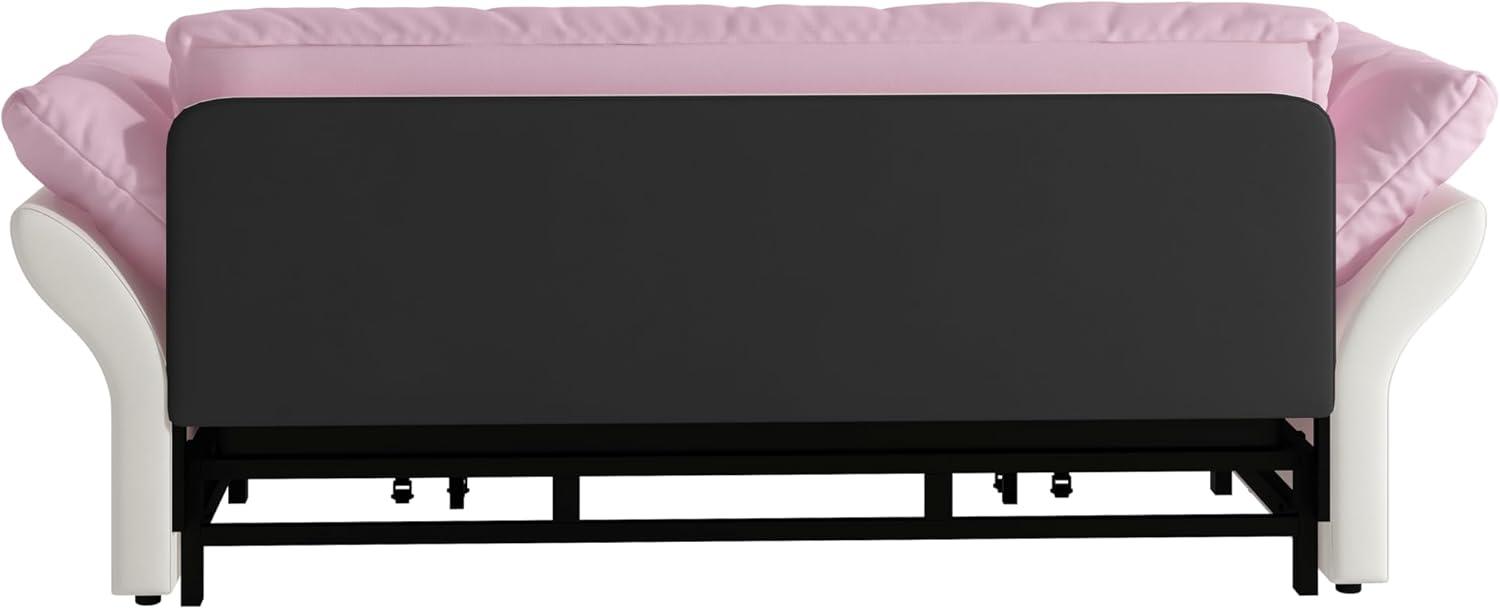
living with the 3 in 1 Convertible Pull Out Sleeper Sofa Couch Bed Queen Size, Tufted Velvet Futon Loveseat Recliner Lounge Chaise Cloud Pullout Sofabed with Soft Pillows Armrest, Side Pockets for Living Room Office over time, you notice it quietly folding into the room’s routines — the corner it takes on, the way a throw gathers on one arm, a book left on the chaise. In daily rhythms it shifts how the space is used, moving between sitting and an occasional stretched-out night without fanfare. The cushions soften where you tend to settle and the velvet picks up a lived-in sheen,small creases that mark repetition more than wear. It becomes a familiar presence in your home and stays.
As an Amazon Associate I earn from qualifying purchases.

